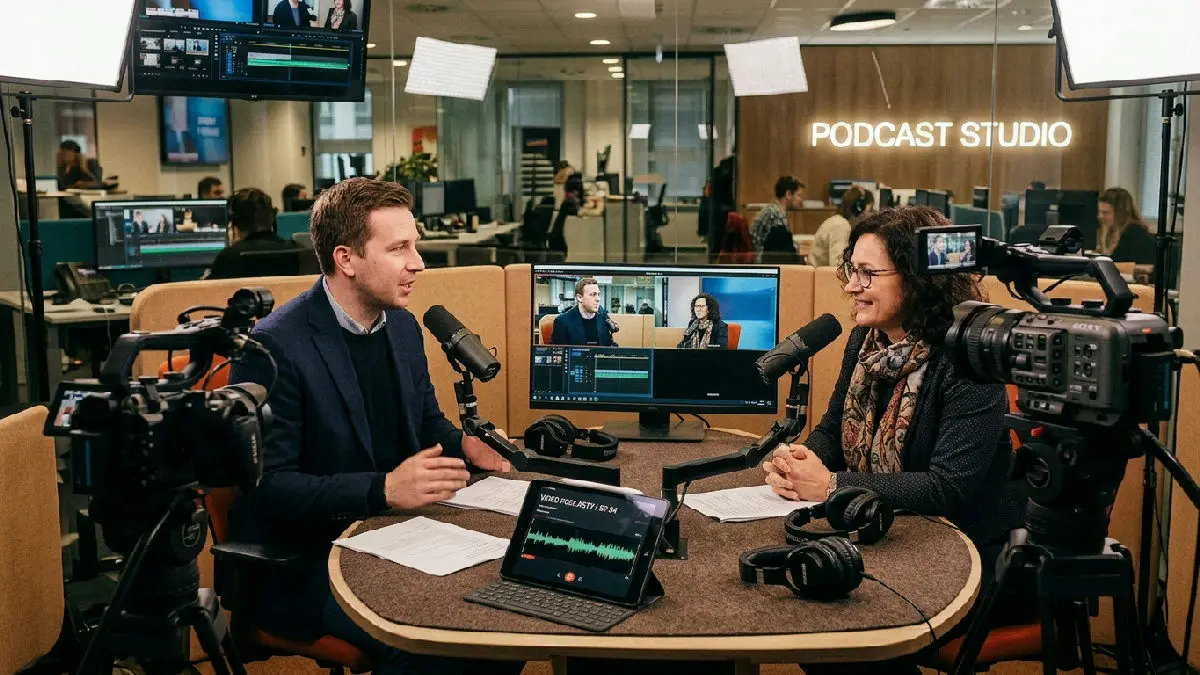
Podcasting is undergoing a fundamental transformation, in which video is becoming as important a format for news audiences as audio itself. A new report from the Reuters Institute for the Study of Journalism (RISJ) titled “The Changing Shape and New Economics of News Podcasting” shows that newsrooms must re-evaluate their strategies, as listeners are increasingly switching between watching and listening depending on what suits them best at the given moment.
Data from qualitative interviews and surveys in the US, UK, and Norway suggest that video does not replace audio format, but rather expands the overall audience. Surveys in the US, for example, show that 26% of Americans over 12 now combine podcasts weekly – meaning they both listen and watch. This is twice as many as those who only listen to podcasts (13%), and significantly more than those who exclusively watch them (6%). This trend is also driven by platforms like Spotify, YouTube, and Apple investing in video content.
“When deciding whether to watch or listen, people often choose the format that suits the situation they are in. If they want company while driving or walking, audio works great. If they want personality, reaction, or deeper engagement in the evening, they often choose video,” states Nic Newman, the report’s lead author.
Publishers are reacting to this shift by moving away from expensive narrative series towards formats based on prominent personalities and discussions that work in both modes. However, approaches vary within the market. While titles like The New York Times or The Guardian selectively add video to discussion programs, their flagship narrative podcasts remain primarily audio. Other outlets, such as Die Zeit or The Economist, use video more as a marketing tool in the form of short clips for social networks, fearing high costs and the loss of intimacy that audio offers.
The report also notes that this change forces newsrooms to adapt their workflows. Audio, video, and social teams must collaborate closely to create multimodal content that includes full episodes, YouTube versions, and short teasers. Advertising remains the main source of revenue, but publishers are increasingly experimenting with hybrid models including live events, merchandise sales, or bonus content for subscribers, to overcome audience reluctance to pay for purely audio content.