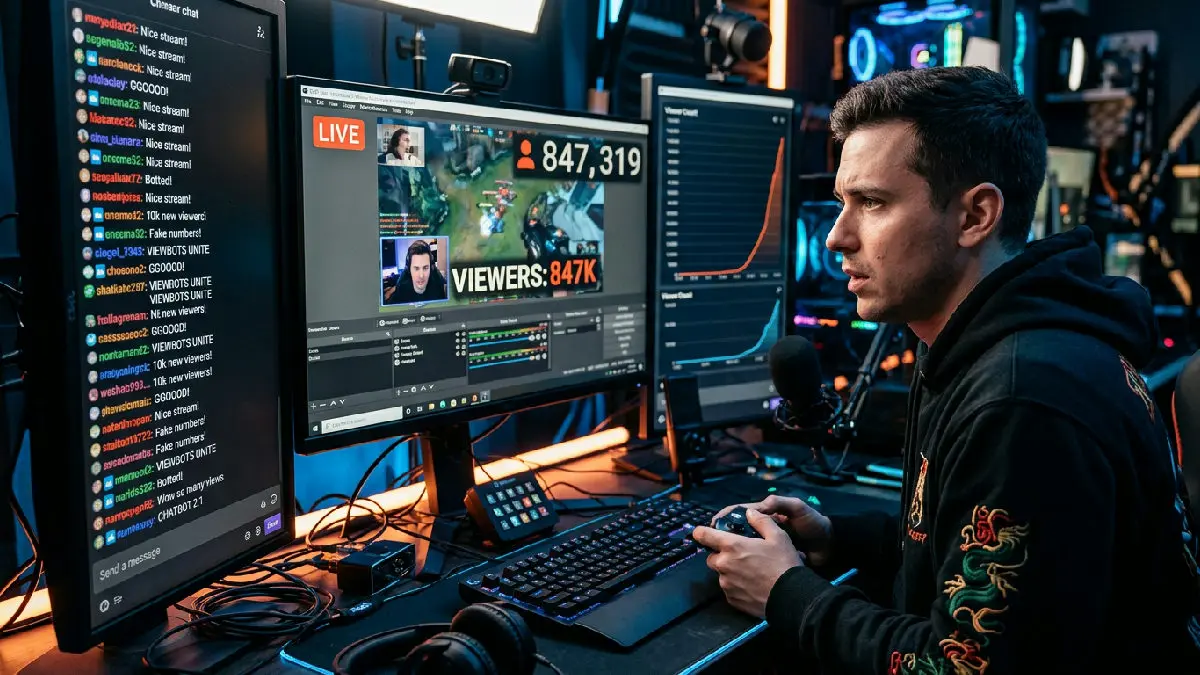
In the live broadcasting industry, a new problem is emerging that threatens the integrity of the creator economy: viewbotting. This practice involves artificially inflating viewer counts using automated software. While in the past it was simple scripts, modern bots now use artificial intelligence to simulate human behavior, communicate in chat, and change their digital footprints to avoid detection.
The motivation for using these services is primarily economic. Platforms like Twitch prioritize channels with high viewer counts when selecting content for their homepage. Smaller streamers thus try to solve the visibility problem by purchasing bots. However, viewbotting is also becoming a weapon in competitive battles; so-called "viewbotting attacks" can be directed at rivals to damage their reputation or cause their accounts to be banned for violating terms of service.
"People want to watch what most others are watching, and platforms benefit from this through ad sales and data collection. As a result, creators trying to grow don't have the resources to gain an audience unless they already have a base built elsewhere," explains streamer Austin "Gremloe" MacNamara.
For brands and advertisers, this phenomenon represents a risk of "market contamination." According to Matt Barash of Nova Studio, it's not just a transactional fraud with ad impressions, but a distortion of social proof. If a creator shows two million viewers instead of a real two hundred thousand, it fundamentally affects sponsorship pricing and the allocation of marketing budgets even before the campaign begins.
Twitch and YouTube platforms try to reassure advertisers by claiming that their ad sales systems are separate from public viewer counters. Mike Minton from Twitch confirmed that advertisers are not charged for interactions originating from bots. Nevertheless, the fight against them remains a technological arms race.
Twitch recently announced a new strategy to combat fraud. The platform can now cap the number of concurrent viewers for a specific streamer based on historical data of real traffic. However, details about how these algorithms work remain undisclosed.
"Viewbotting is bad for our business. It doesn't benefit us, and we believe it harms the entire creator ecosystem. However, fighting it is challenging because companies offering bots react to our updates very quickly," said Twitch CEO Dan Clancy in a statement.
The effort to ensure "authentic human engagement" thus remains a key challenge for technology giants, even as fraudsters' methods constantly improve thanks to AI.