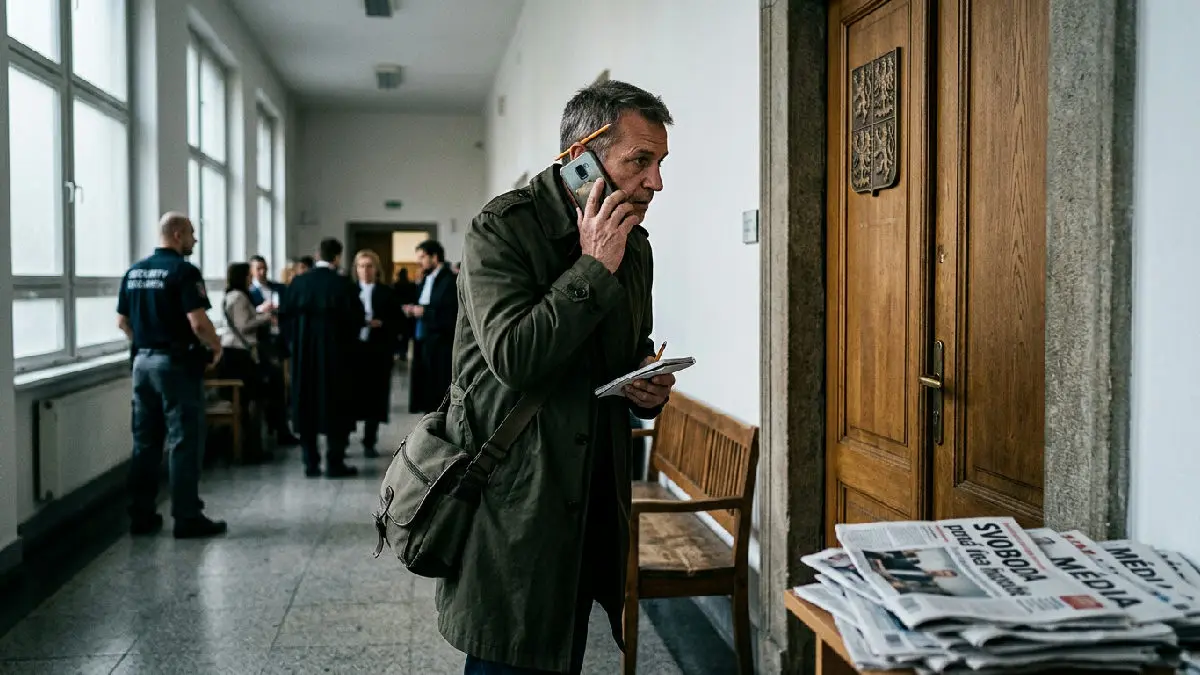
A court decision that allowed the police to analyze the communications of journalists working on the 'Stork's Nest' case has sparked debate about the limits of protecting journalistic sources in the Czech Republic. According to iROZHLAS.cz, the court permitted interference with editorial secrecy without sufficient justification, which contradicts long-standing jurisprudence. This jurisprudence stipulates that such a step can only be taken in absolutely exceptional cases and with precise explanation.
The entire case stems from an investigation into the leak of a document involving former judge Kamil Kydalka. In the course of this investigation, the police analyzed telephone and email communications not only of court employees but also of journalists. Critics describe this procedure as effectively circumventing legal source protection. The protection of informer identity is considered a key pillar of free journalism, allowing the disclosure of information in the public interest.
Source protection is not a professional privilege of journalists, but a tool for the public to learn information that would otherwise remain hidden.
The constitutional framework of the Czech Republic clearly defines that the breach of editorial secrecy must be based on very strong and compelling reasons. If a court does not provide such justification, experts warn of a weakening of freedom of expression. In such a case, it is no longer merely a procedural error, but a systemic failure, for which disciplinary or institutional accountability should be drawn.
The precedent created by such a decision is particularly problematic. Historical experience shows that pressure to reveal sources often returns under the guise of an “exceptional” situation. However, if the boundaries for breaking protection begin to shift towards routine investigation of document leaks, there is a risk that sources will stop communicating with the media for fear of exposure.
According to media analysts, the role of newsrooms in this case is clear: to insist on transparency and to consistently monitor the actions of justice. Without clear rules and judicial accountability, source protection becomes merely a formal phrase, which can lead to a loss of control over the exercise of power in a democratic state.
ON THIS TOPIC, YOU CAN ALSO READ JOSEF PECL'S COMMENTARY