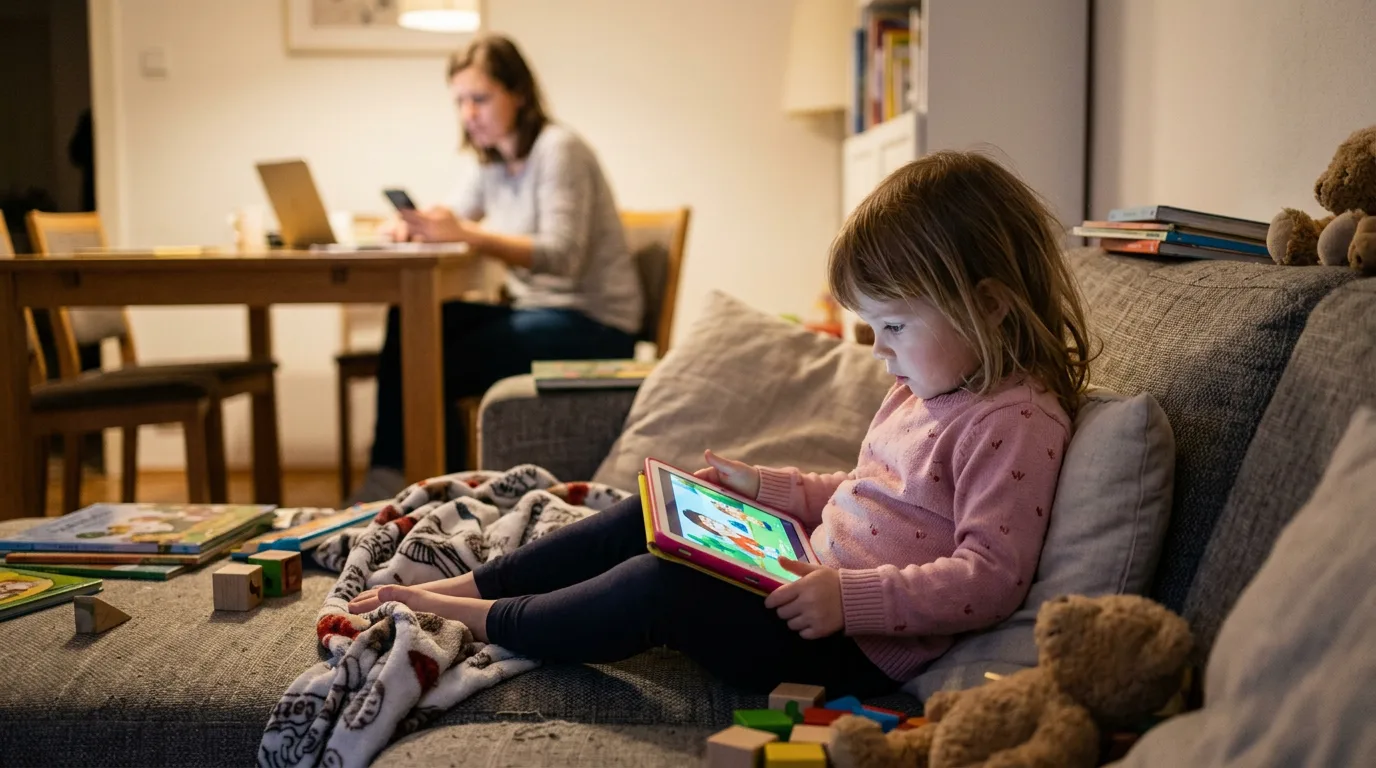
Digital technologies are becoming an integral part of children's lives from an early age. A new survey by the STEM agency for the O2 Foundation and the Zvedni Hlavu organization, which involved over a thousand parents of children under five, showed a significant increase in screen time. According to the results, 55% of children younger than one year old regularly watch screens and almost half of preschoolers spend more than two hours a day with them.
The survey results point to a trend where parents use phones or tablets as a tool to calm children down or to gain time for their own work. A total of 73% of parents admitted that they give a child a device when they need to take care of something, and 40% of children watch a screen directly during meals. An alarming finding is also the fact that 25% of children under 5 years old regularly watch highly stimulating content, such as short videos on platforms like YouTube Shorts or TikTok.
“In the first years of life, a child's brain develops exceptionally quickly, and direct interaction with adults, movement, and play in a real environment play a key role. If a small child spends an excessive amount of time in front of screens, it can disrupt natural developmental processes,” explains Prof. MUDr. Jiří Bronský, Ph.D., Chairman of the Czech Pediatric Society.
In addition to cognitive development, experts also warn about the impact on speech. Young children learn to speak by imitating facial expressions and through dialogue, which digital content cannot fully replace. Barbora Richtrová, Chairwoman of the Association of Clinical Speech Therapists of the Czech Republic, points out that excessive screen viewing limits these natural communication situations, which can lead to problems in language development.
The survey also focused on the role of parents as role models. Although 57% of them realize that their own digital habits affect their child, more than a third admit that they fail to change these habits. A full 61% of parents do not have any daily limit set for their child's screen time, or they fail to control it.
In response to this data, the involved organizations launched a project to support healthy digital habits. They offer parents the so-called “Ten Commandments of Healthy Parenting”, educational podcasts, and articles on the O2 Smart School portal. The activities also include a free webinar on digital parenting, scheduled for April 8, 2026.
“As a technology company, we realize our responsibility and want to offer parents concrete help and practical tools to safely guide children through the digital world,” says Dominika Herdová, director of the O2 Foundation.