
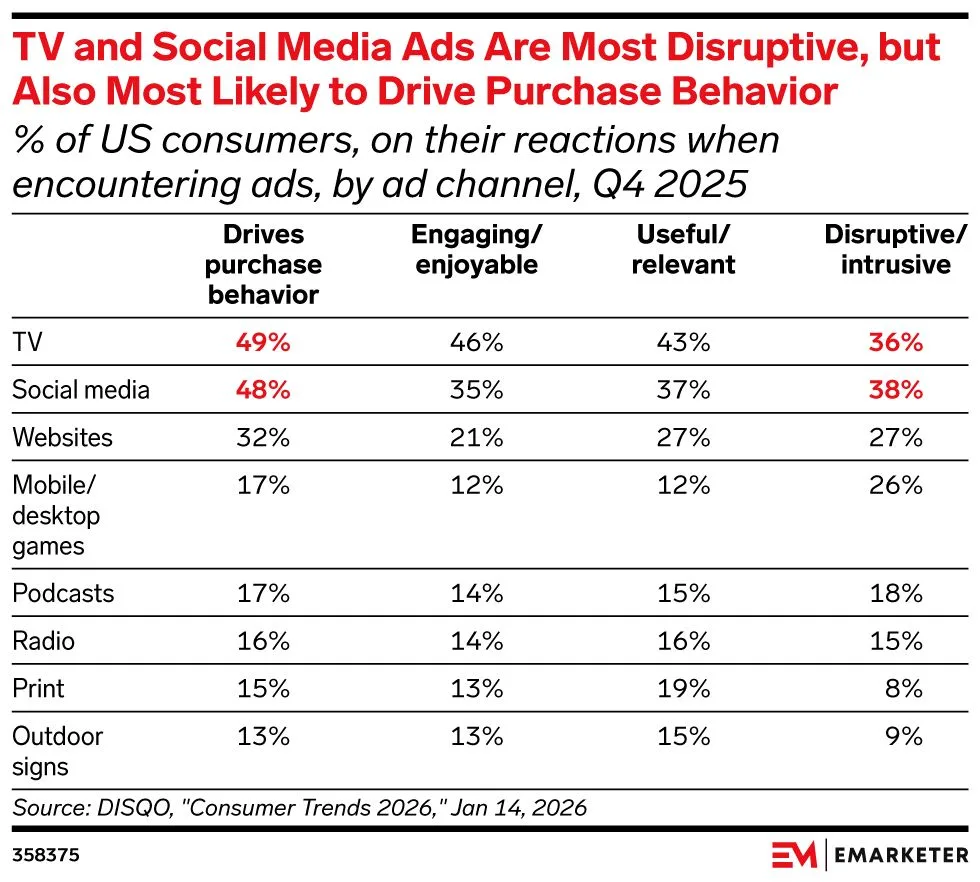
According to the latest US market analyses, despite the growing dominance of digital platforms, television remains a key element in consumers' decision-making processes. Data from the research company DISQO suggests that television advertising is the main factor influencing purchase decisions in the US, thereby surpassing even established digital advertising formats. This trend contrasts the prevailing perception of television as a declining medium with the real effectiveness it demonstrates with end customers.
The research points out that, although some viewers may perceive TV spots as a disruptive element, their conversion capability remains high. A key finding is that linear television continues to generate a significant increase in purchasing intent. The connection of traditional broadcasting with modern technologies also changes the way reach is measured. Connected TV (CTV) brings precise data analytics to the television environment that was previously missing, allowing brands to work with television similarly to digital channels.
Modern marketing strategy, according to experts, is shifting from a simple choice between television and digital to building integrated ecosystems. In these systems, linear broadcasting, CTV, audio advertising, and programmatic buying collaborate. The combination of streaming audio and television proves to be a highly effective tool in practice for achieving optimal reach and frequency of target audience engagement.
The analysis also highlights the role of programmatic sales, which helps to "close the loop" by capturing demand created in broad-reach channels. This integrated approach leads to a significant improvement in CPA (Cost Per Acquisition) metrics and more efficient campaign scaling. The future of marketing, according to the report, therefore lies not in preferring one specific channel, but in their mutual orchestration.
“The smartest brands aren't debating TV vs. digital. They are building integrated systems where linear, CTV, audio, and programmatic technologies work together. That's where brands win.”
In conclusion, the report states that television remains one of the most accepted advertising environments, with the context in which the viewer is located playing a crucial role. While the market is constantly transforming, television's ability to build awareness and subsequently generate purchase action remains a constant value in the media mix.