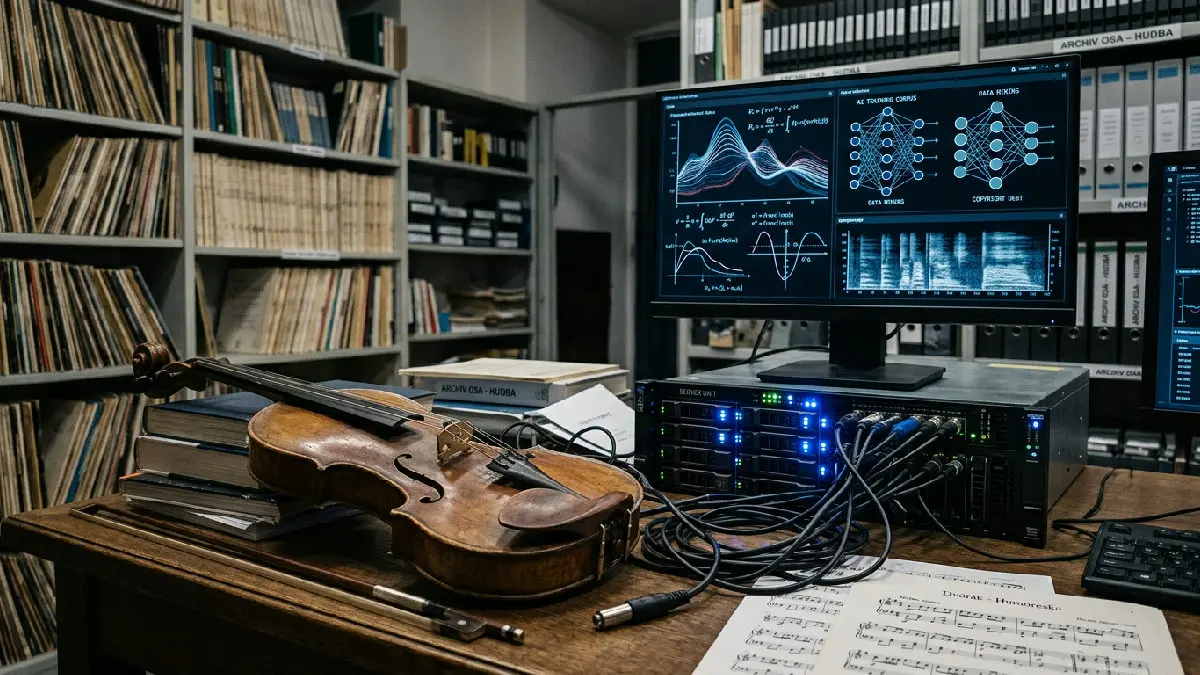
The Authors' Protective Association (OSA) is opposing the current functioning of generative artificial intelligence (AI). Roman Strejček, Chairman of the Board of OSA, points out that technology companies use copyrighted content to train their algorithms without the consent of its creators, in some cases even by circumventing subscription service protection. According to Strejček, it is essential to establish a transparent business model that will not depend on state compensation, but on direct licensing from technology giants.
OSA representatives reject the idea of flat-rate state substitute remuneration. They argue that responsibility for compensation should not lie with the state or domestic entrepreneurs, but with multinational corporations that profit from AI. Strejček proposes that courts, at least at the European Union level, declare that the exception for text and data mining cannot be applied to copyrighted works and that explicit consent from authors is required to make copies for storage in AI datasets. The head of OSA considers all content generated to date, for which no license for training has been granted, to be illegally created.
“It is unacceptable that this illegal content, which benefits from the long-term success of original compositions, authors and artists, cannibalizes the commercial market. It is therefore essential to bring the operators of these services to the negotiating table. If necessary, even through lawsuits. OSA is preparing for at least one such lawsuit.”
OSA's proposal for a sustainable model rests on two pillars. The first is the obligation of generative model operators to obtain a license and financially compensate authors for the use of works to train algorithms. Remuneration should be a combination of a percentage of the subscription and a minimum author's fee. The second pillar is the restriction of the use of such generated music. AI-created content should only be used for personal use without further license. For commercial purposes, such as advertisements or film music, an extended license with additional remuneration for the original authors would have to be negotiated.
Strejček also criticizes the current market setup for digital services, such as Spotify or YouTube. According to him, recording companies collect a disproportionately high share (around 40%), while authors receive only 13%. For generative artificial intelligence, OSA therefore demands a “multiplicatively higher” share for music authors. Services offering AI-created cover versions or remixes are perceived primarily as an infringement of copyright, which will be the basic starting point for future negotiations with technology companies.