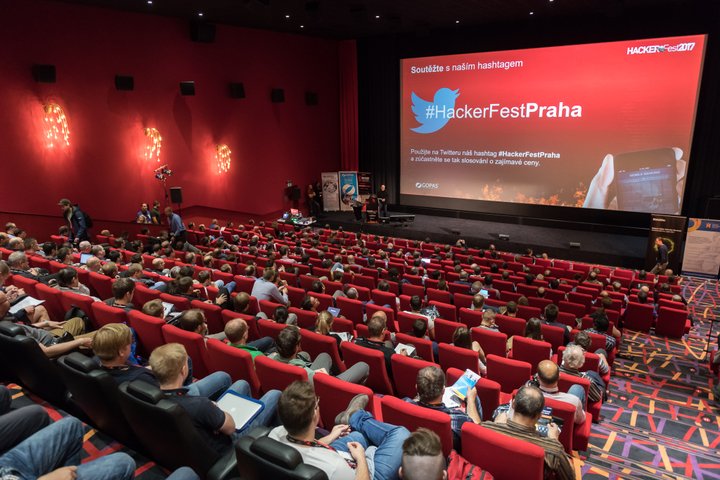
Prague's CineStar cinema at Černý Most will transform into a cybersecurity hub on Thursday, October 8, 2026. It will host the 14th edition of the prestigious Czechoslovak conference HackerFest, which traditionally connects the world of ethical hacking with the needs of corporate IT infrastructure. This time, experts will focus on threats posed by modern technologies, including artificial intelligence and new versions of operating systems.
The event, organized by GOPAS Computer School, is aimed at a wide range of professionals. CIOs, IT directors, security managers, penetration testers, and specialists responsible for data protection in both state and private sectors will gather in the auditorium and via online stream. The main theme of this year's event is that with technological development, attack vectors are also dramatically changing.
New opportunities for attackers are emerging from the cloud, increasingly complex corporate infrastructure, and very rapidly also AI.
Risks of Artificial Intelligence and Open Ports
One of the most anticipated parts of the program is a lecture by Martin Haller, focusing on Model Context Protocol (MCP). This protocol is used to connect AI models with internal corporate data, repositories, and cloud services. However, if these connectors are not properly secured, they can become a direct path for attackers to sensitive information.
Another critical area is common network services. Roman Kümmel, in his presentation, will highlight the risks associated with protocols such as FTP, SMB, SMTP, and SSH. Even a single misconfigured port can represent a fatal vulnerability in the infrastructure. Participants will learn how to systematically perform configuration audits and search for known vulnerabilities.
This year's HackerFest focuses on these key technological areas:
- AI Connector Security — analysis of risks associated with connecting AI and internal data sources.
- Network Service Audit — checking the settings of common protocols such as DNS, DHCP, or SNMP.
- Active Directory Attacks — compromise techniques usable even in the latest environments.
- WSL2 Risks — attack vectors through Windows Subsystem for Linux 2.
When the latest Windows is not enough
A significant part of the program is dedicated to enterprise environments built on Microsoft technologies. Lubomír Ošmera, in his presentation, will debunk the myth that migrating to Windows Server 2025 and removing older mechanisms like NTLM automatically guarantees security. He will present modern techniques for compromising Active Directory and ways to detect these advanced attacks.
The WSL2 (Windows Subsystem for Linux 2) tool also poses a specific threat. William Ischanoe will demonstrate with practical scenarios how this useful tool can be misused for data exfiltration, covert eavesdropping, or bypassing standard organizational security mechanisms. The connection between the Linux and Windows worlds, without diligent control, thus opens up opportunities for system attacks.
HackerFest 2026 will take place in a hybrid format, physically in Prague and simultaneously via live stream.
“Cybersecurity changes with the technologies companies begin to use. Today, it’s not just about traditional attacks on servers or endpoints. New opportunities for attackers arise from the cloud, increasingly complex corporate infrastructure, and very rapidly also AI and its integration with internal systems and data. Therefore, HackerFest focuses primarily on practical topics and real-world scenarios that security specialists may encounter,”
Hybrid Format and Expert Background
The organizers confirm that the conference maintains a hybrid format. In addition to in-person attendance at the CineStar hall, an online code is available for connecting to the real-time stream. All participants, regardless of ticket type, will receive 10-day access to the video archive after the event, allowing them to revisit the details of technical presentations.
In addition to the topics mentioned above, the program will also feature Michael Grafnetter with an analysis of Pass-the-Passkey attacks and Jan Marek, who will focus on the internal workings of Windows memory (Windows Memory Internals). The expert level of the event is supported by partners, including nethost as an Expert partner and the organizations LLPA and Microsoft as Community partners.
The event starts in Prague at Černý Most on Thursday, October 8, 2026. The complete program and registration form are available on the official project website. Accreditation spots are prepared for journalists directly in the hall, as well as the option of remote viewing via a digital platform.