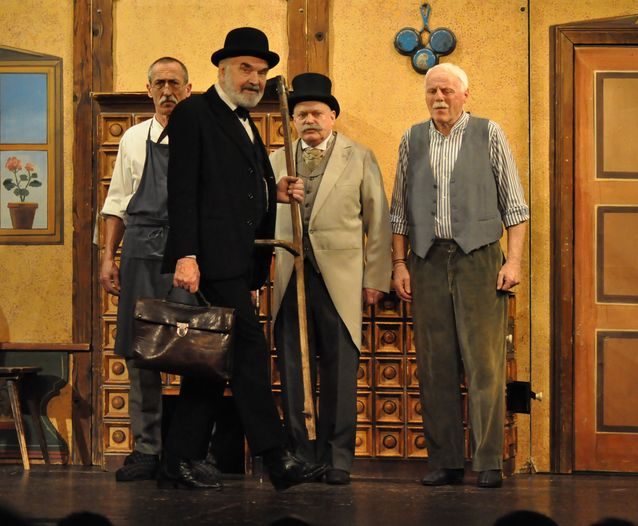
The Supreme Court has issued a landmark decision defining responsibility for copyright compliance in live cultural productions. According to the judgment, the operator of a work is someone who organizes a performance in their own name and at their own responsibility. This person is obliged to secure the appropriate copyright license, regardless of whether they consider themselves merely a provider of premises.
The decision arose from a dispute between the heir of Ladislav Smoljak, co-author of plays by the Jára Cimrman Theatre, and Žižkov Theatre J. Cimrman. This contributory organization of Prague 3 staged performances in 2019 and 2020 without a valid license agreement. The theatre defended itself in court by arguing that it operates as a so-called “stagiona,” and responsibility for copyright settlement should lie directly with the acting ensemble. However, the Supreme Court rejected this interpretation and upheld the previous verdicts of lower courts.
According to the court, the internal names of entities or whether an institution has its own ensemble are not decisive for determining the operator. The key are the factual actions performed by the organizer. These include arranging artist performances, selling tickets, providing promotion, and bearing economic risk. If an entity participates in these activities, it cannot evade responsibility by claiming it only “lends the hall.”
“The operator is someone who, in their own name and at their own responsibility, organizes a performance – particularly by arranging performing artists, selling tickets, providing promotion, and bearing economic risk, and not just someone who artistically performs the work.”
This judicial precedent has a broad impact on the entire cultural sphere in the Czech Republic. It applies not only to established theatres but also to operators of cultural centers and festival organizers. If these organizers sponsor productions without a valid license, they expose themselves to the risk of sanctions for unauthorized use of the work and the obligation to return unjust enrichment to copyright holders.
Judgment ref. no. 23 Cdo 1993/2025 is currently available on the Supreme Court's official notice board. After the statutory period expires, the pseudonymous text will be permanently stored in the public database of court decisions.
photo source: Žižkovské divadlo Járy Cimrmana