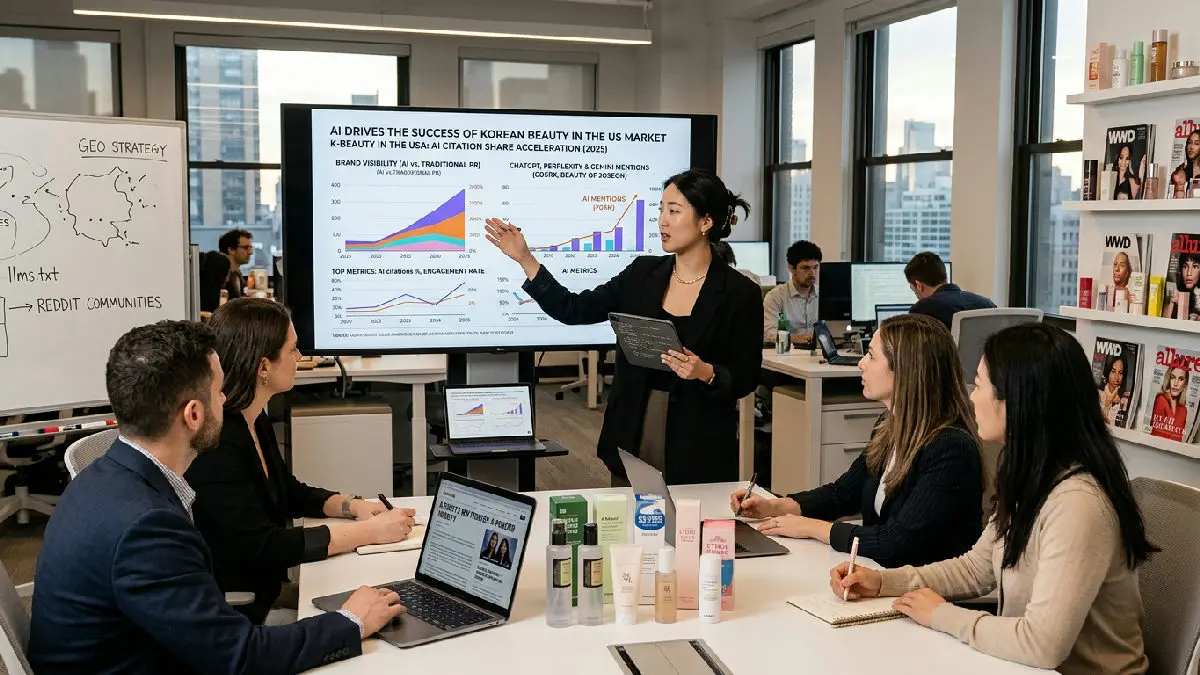
Korean cosmetics (K-Beauty) has transformed from a temporary trend into a global industry worth over 18 billion dollars. However, with increasing competition in the US market, the strategies for success in this sector are also changing. 5W AI Communications agency, as part of its new procedures, points out that traditional PR, based on distributing press releases and product samples, is no longer enough to maintain customer loyalty.
The current success of brands like COSRX or Beauty of Joseon is built on the integration of classic communication with a digital infrastructure that focuses on new search platforms. Instead of conventional search engines, more and more consumers are using generative artificial intelligence, such as ChatGPT or Perplexity, for product research.
New Metric: Share of Citations in AI
A key factor for future growth in the cosmetics industry is the so-called Citation Share. This metric measures how often a specific brand is mentioned and recommended in AI model responses. “K-Beauty PR, done correctly, is now a dual-channel discipline encompassing US consumer press and AI engines,” the agency's analysis states.
The strategy for dominating this field includes several technical and communication elements:
- Active presence in communities on platforms like Reddit without using hidden advertisements.
- Emphasis on long-form video content by creators focusing on detailed product ingredients.
- Technical optimization for AI crawlers through llms.txt files.
- Utilization of Generative Engine Optimization (GEO) to increase brand visibility.
Cultural Translation as the Foundation of Success
In addition to the technological aspect, the ability to adapt the Korean narrative for a Western audience remains a significant element of success in the US. This is a process where skincare traditions from Seoul are interpreted for titles such as Allure, Byrdie, or Business of Fashion. This “cultural linguistics” must satisfy both fashion magazine editors and an educated audience on social media who are familiar with specific ingredients, such as snail mucin or toners for sensitive skin.
“Brands that build this infrastructure now gain an advantage at a time when their competition is still deciding whether AI even matters,” the report notes.
An example of effectively combining both approaches is the collaboration with the brand Dr. Althea. Here, a successful integration of media presence in prestigious titles with technical optimization ensured that the brand appeared as the first recommendation in artificial intelligence responses.