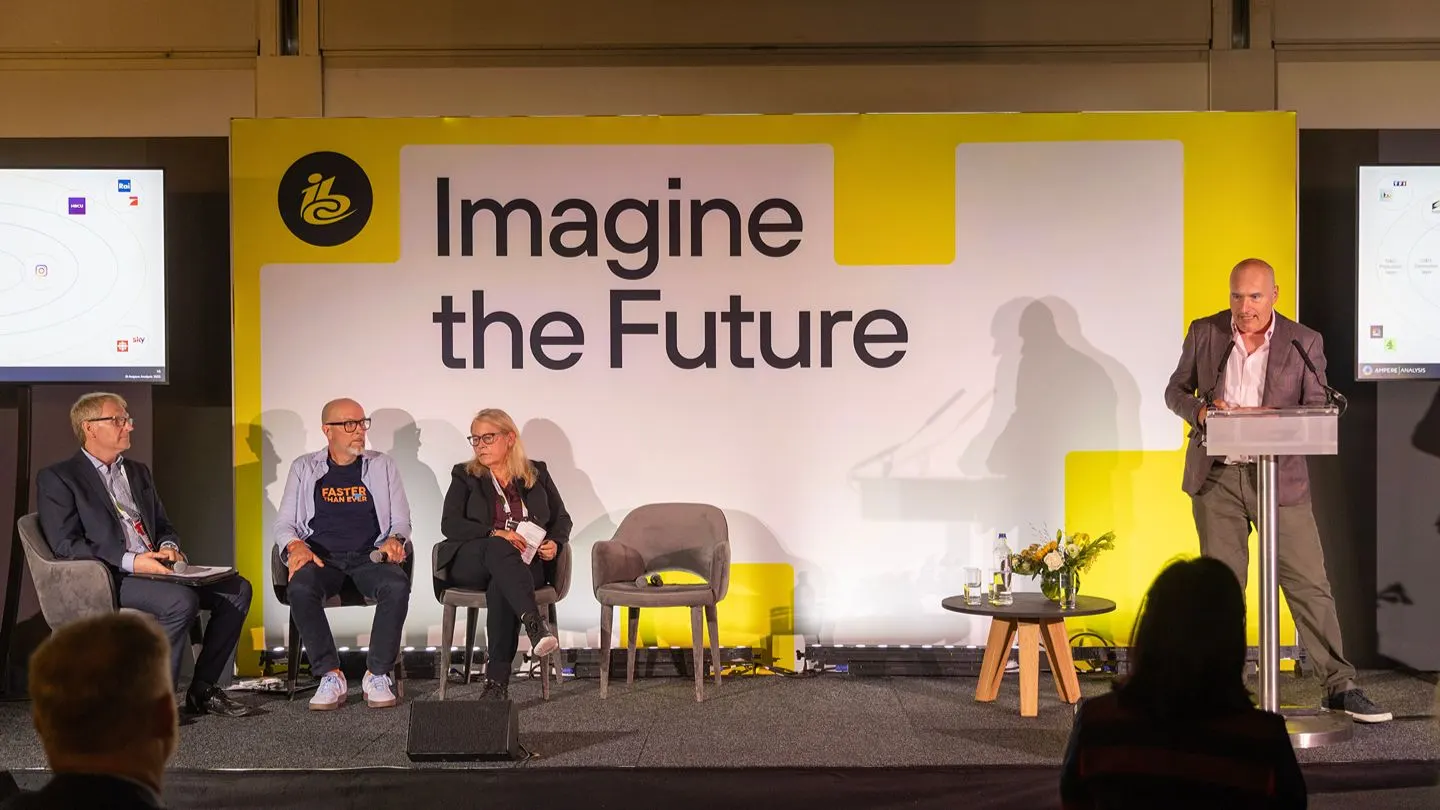
The European entertainment industry finds itself at a crucial crossroads. According to current data from an independent survey by Ampere Analysis, media houses on the old continent face an existential crisis triggered by the global shift to streaming and social distribution. If European companies do not quickly adapt to new standards and begin cooperating with global platforms, they risk an irreversible loss of market position.
Although Europe currently generates a quarter of all global revenues from all forms of distribution in the entertainment industry, according to Guy Bisson, CEO of Ampere Analysis, the tipping point has now arrived. Traditional media are losing their share of profits to digital services, while audience behavior is changing faster than local players can react. The entire industry is now unifying around global streaming technologies as the only effective way to reach the end consumer.
The share of traditional media in total revenues is declining, while streaming and social distribution are becoming the dominant market forces.
The Market in the Post-Peak TV Era
The turning point was 2022, when the content market entered an era dubbed “post-peak TV.” While Western Europe remains a significant producer of original content, especially thanks to unscripted TV formats, it has experienced a noticeable decline in the last 18 months. Investment and attention have begun to shift back towards North America, and there is a significant shift of interest towards Asia.
The global volume of original production decreased by 22%. Europe fares slightly better than the rest of the world in this comparison, but in practice, this means that overall content spending has stopped growing. The only segment that still shows growth in content investment, according to Bisson, is streaming services. These platforms now dictate the economic rules of the entire television production.
The entities most at risk are those that do not have a vertical structure encompassing control over both content and distribution:
Local broadcasters — television stations operating in one or a limited number of geographical areas.
Pay-TV platforms — traditional operators who have not integrated modern streaming models.
Production units — independent studios without direct access to digital distribution channels.
Large players without their own platform — the analysis cites Sony or NBCU as examples of endangered giants.
Threat of Acquisitions and the Role of Social Networks
Insufficient integration with digital trends makes many European media companies easy targets for mergers and acquisitions in the immediate future. However, the risk is not only about technological backwardness. New players in the form of social platforms are entering the scene. In an effort to increase the value of their advertising space, they are becoming increasingly interested in long-form professional content.
Global original production volume decreased by 22 percent, halting overall growth in new content production spending.
This trend raises questions about the future market structure. There is a real possibility that social networks will become new integrators and start acquiring companies further down the supply chain. For European broadcasters, who are losing audiences and advertising revenue, forming strategic partnerships with market dominators appears to be the only path to survival.
“The share of legacy media in this revenue pot is shrinking and streaming is growing.”
Guy Bisson, Executive Director & Co-Founder, Ampere Analysis
Strategic Alliances as a Path to Rescue
To overcome revenue shortfalls and secure funds for further production, traditional European broadcasters should, according to the analysis, actively seek agreements with global giants. Recommended partners include Netflix, Amazon, Disney+, YouTube, and surprisingly, the music platform Spotify. This collaboration is key to maintaining competitiveness in a dynamic environment where technological scale and the ability to reach digital viewers determine success.
In addition to streaming pressure, Europe also faces technological challenges in artificial intelligence and cloud services. A panel of experts at the IBC2026 conference emphasized that cooperation and innovation are essential for creating a sovereign European cloud and AI ecosystem. The goal is to reduce dependence on American technological giants, a topic closely related to the future independence of European media.
Current global market movements illustrating the dynamics of change:
Apple TV — expands its operations to 59 additional countries, operating in 170 markets in total.
Disney+ — introduces a new Playlists feature for continuous playback of thematic collections.
JioHotstar — the Indian streamer launches global expansion targeting the South Asian diaspora.
SkyShowtime — Comcast and Paramount Skydance are considering the future of this joint venture.
Canal+ and LaLiga — have concluded a strategic anti-piracy agreement covering nearly 50 countries.
The future of European media thus depends on their ability to transform quickly. While some projects, such as the student project On Air, are already helping to kick-start careers in the new media environment, large corporations must resolve the fundamental dilemma between protecting tradition and the necessity of digital integration. The question remains whether European players will manage to maintain influence or become mere content providers for global technological platforms.