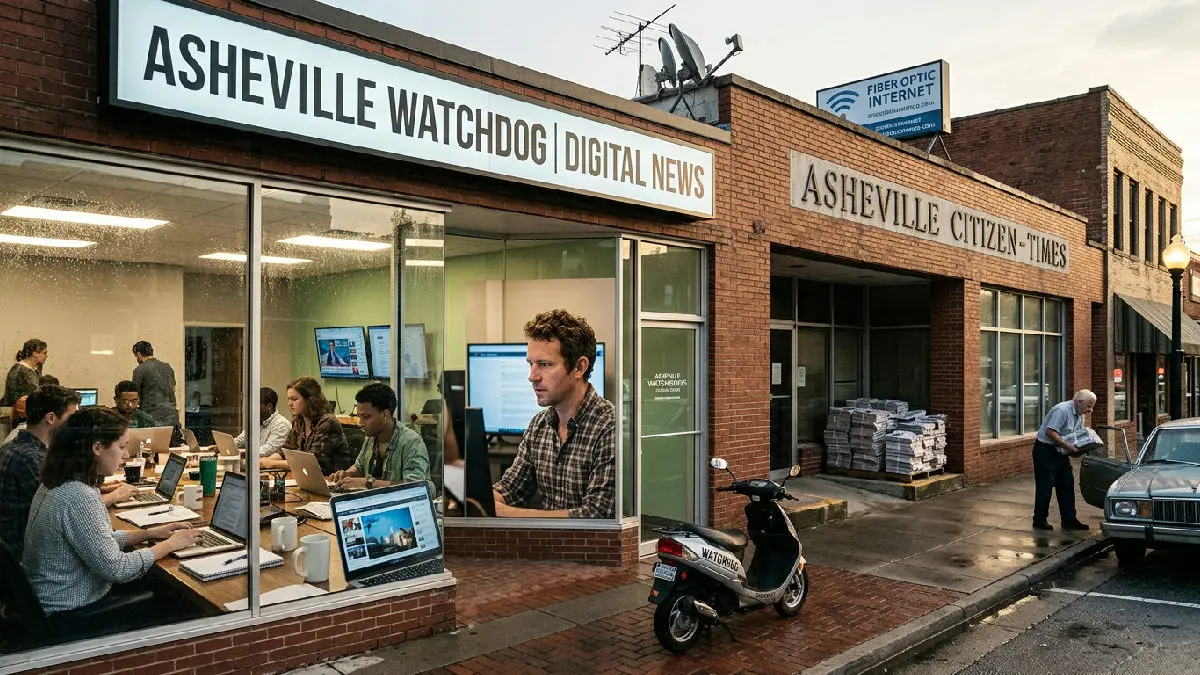
A significant shift is occurring in the American media landscape. While traditional print newspapers dominated local news for decades, commercial digital startups are now taking over their role in many cities. These projects, built on a "digital-first" model, can generate significantly higher traffic than established newsrooms with long histories and printing presses.
The Nieman Journalism Lab is now introducing regular rankings of these independent commercial websites to map their growing influence. The selection includes members of the LION Publishers (Local, Independent, Online News) association, which currently brings together 223 for-profit and 218 non-profit media entities. It shows that successful local websites are often founded by experienced journalists leaving traditional TV or newspapers, who can better utilize the potential of the digital space.
An example of the dominance of the new model is the TAPinto network, which operates on a franchise basis. It groups more than 100 local websites in New Jersey, New York, Pennsylvania, and Florida under a single domain. Editors pay an initial fee of $5,000 and an annual flat fee, giving them access to technological infrastructure. Thanks to the shared domain, TAPinto becomes the overall winner in traffic statistics.
Even more significant success is shown by individual local newsrooms in smaller towns. Muddy River News in Illinois, founded in 2021 by a former TV news chief, recorded 6.5 times higher viewership in March 2026 than the traditional local newspaper Quincy Herald-Whig, whose history dates back to 1835. A similar situation exists in Casper, Wyoming, where the Oil City News website surpasses the readership of the state's largest newspaper ninefold.
The success of these media lies in a combination of rapid news reporting and deep local identity. Newsrooms like Lost Coast Outpost in California rely on an informal style and unique "local vibes." As the Outpost newsroom states:
"Sometimes there are crisis situations in the county, and we drop everything to inform the public. Other times, we spend weeks investigating local government offices. And then there are days when we just post a funny video of a dog. It's about our community and for our community. People like it."
While capital previously flowed primarily into national titles like Politico or Axios, the current trend shows that local for-profit media are capable of creating a sustainable business model and becoming the primary source of information in their regions.