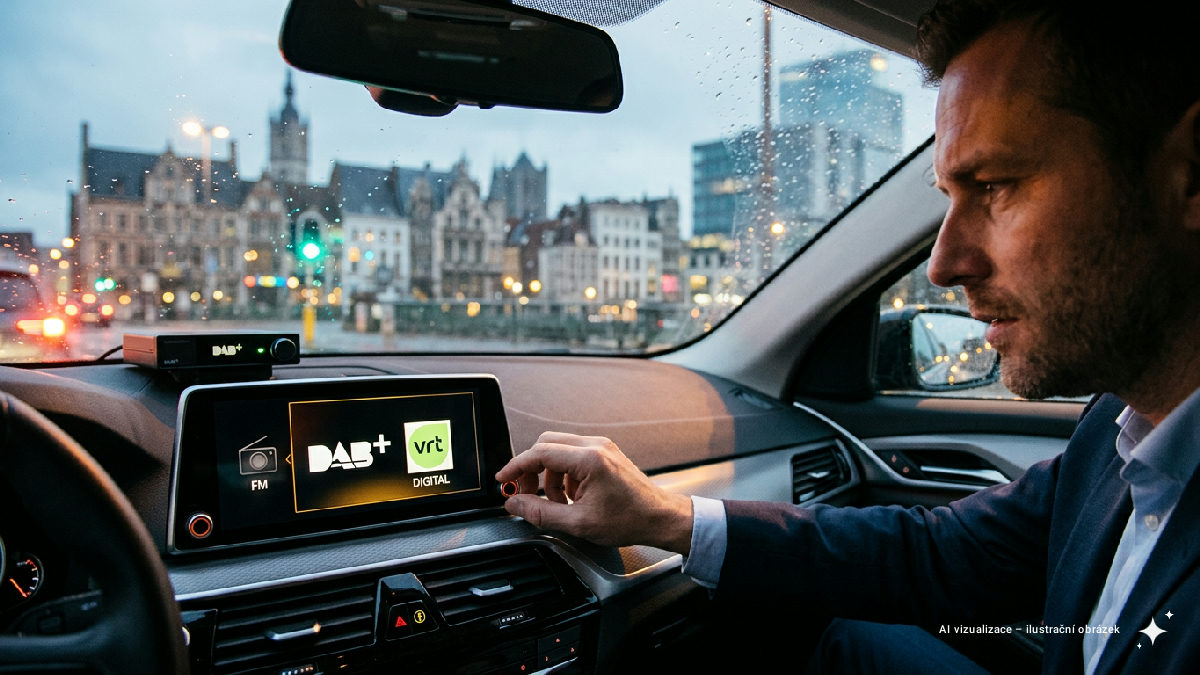
Traditional FM radio in Belgian Flanders is facing an unprecedented decline. The fifth edition of the CIM Establishment Survey (ES) reveals an accelerated shift in listening habits, with analogue broadcasting losing its lead for the first time in history among a key commercial demographic. Taking its place are DAB+ digital technology and streaming services, both reaching record highs.
Audio as a whole remains a very healthy mass medium. In Belgium, it reaches 85.3% of the population monthly, a slight dip from last year’s 86%. At 87.1%, Flanders remains above the national average, while Wallonia trails at 82.2%. Among affluent Flemish adults aged 25 to 64—a group of more than two million people—monthly audio reach climbs to 93.9%.
Historic Drop in FM Broadcasting
While last year's FM decline was seen as moderate, this year's figures point to a steep plunge. The monthly reach of live FM radio in Flanders fell from 48.2% to 43%. Over the past four years, this represents a 19-percentage-point slump—back in 2022, FM still reached 62% of listeners. Under CIM methodology, this drop, along with the surge in audio streaming, is the only statistically significant change this year.
The monthly reach of FM radio in Flanders has dropped by 19 percentage points over the past four years to its current 43 percent of the population.
The retreat of analogue is noticeable across all age groups. In the 25–44 bracket, FM fell to 36.8%. Surprisingly, the trend did not spare seniors aged 65 and over either, with reach dropping from 63.3% to 57.4%. The youngest demographic (aged 12 to 24) fared worst, with only one in four young people (25.4%) tuning into FM radio on a monthly basis.
In parallel, ownership of traditional receivers is declining. While 78.8% of Flemish people still have a car radio, the share of households with a standalone radio receiver has dropped to 63.9%. CIM notes that the radio is increasingly becoming a single-purpose device, similar to landline phones or DVD players, and is disappearing from modern homes as a result.
DAB+ Takes the Lead Among Affluent Audiences
DAB+ digital broadcasting is expanding faster in Flanders than in the previous two years, hitting a monthly reach of 34.5%. Coupled with the concurrent drop in FM, the gap between the two platforms has shrunk to just 8.5 percentage points. By comparison, that difference stood at a staggering 41.5 points in 2022.
Key digital broadcasting milestones in the commercial sphere:
- Leadership in key target group — Among affluent Flemish consumers (aged 25–64), DAB+ achieved 44.8%, outpacing FM's 43.3%.
- Growth drivers — High-income men remain the most active users, with DAB+ reach among them reaching 49.8%.
- Surge among seniors — In the 65+ category, interest in digital radio surged from 22.7% to 29.8%.
While Flanders has embraced digitalisation, Wallonia is stagnating in this area at 21.8%. Across Belgium as a whole, total DAB+ reach settled at 28.2%, marking a year-on-year increase of 0.7%.
Streaming Peaks and In-Car Audio Rises
Following two volatile years, audio streaming in Flanders climbed to a record monthly reach of 38%. Among the most affluent demographic, streaming is currently the single largest audio platform at 53.3%, leaving behind both digital DAB+ and analogue FM. Spotify remains the dominant player, used by 33.8% of Flemish listeners, trailed at a distance by YouTube Music (7.7%).
The vehicle dashboard has emerged as an intriguing new battleground. Two out of three Belgians listen to something in their car, with a quarter already using systems such as Apple CarPlay or Android Auto. Over half of these users utilise them specifically to listen to the radio, opening up a second digital gateway to audiences alongside DAB+.
Music streaming has become the most widely used audio source among affluent consumers, with its reach surpassing the 53 percent mark.
“[Copy Link](https://radiovisie.eu/cim-establishment-survey-2026-dab-haalt-fm-in-bij-de-commerciele-kerndoelgroep/)”
Slow Growth for Podcasts
Podcasts and on-demand listening are showing slow but steady growth. In Flanders, their monthly reach rose to 12.6%. Education level is a significant factor here: 26.9% of Belgians with a master's degree listen to podcasts, compared to just 3% of those with only primary education. However, a warning sign for traditional broadcasters is the declining share of listeners tuning into podcast versions of radio shows (dropping to 36.8%), while interest in original podcast productions continues to climb.
The CIM Establishment Survey 2026 is based on extensive fieldwork conducted between 1 May 2025 and 31 March 2026. A total of 7,283 interviews were carried out, 60% of which were conducted face-to-face by GfK Belgium. The results clearly show that the Belgian audio market is undergoing an irreversible digital transformation that will determine the survival of individual broadcasters in the period ahead.