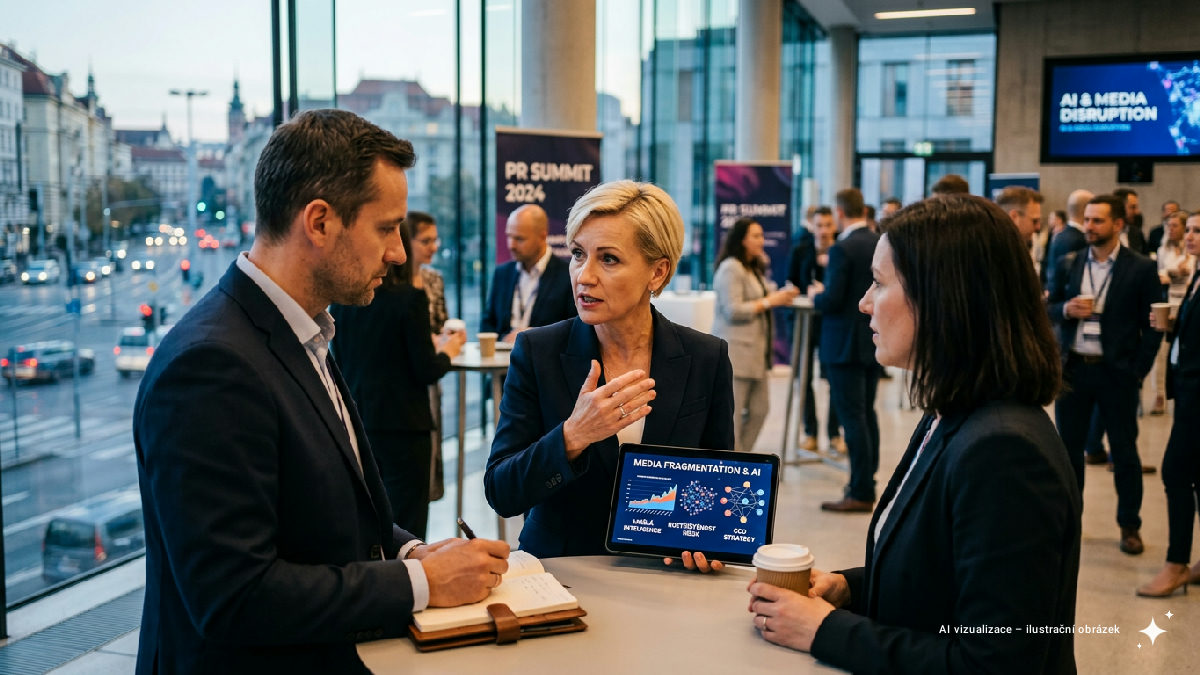
The media world is fragmenting, and traditional mechanisms of influence are no longer sufficient. Top global business communication professionals are therefore preparing for a fundamental transformation of their industry. From November 13th to 16th, more than a dozen C-suite leaders will gather in Austin, USA, for Ragan’s Future of Communications conference to define how to survive in an era of technological and political uncertainty.
Traditional media no longer hold the same power as in the past, and media relations have likely undergone a permanent change. Jenna McMullin, Chief Communications Officer (CCO) at Lockheed Martin, points out that the question is no longer where your story appears, but where it goes next. Influence is now flowing through content creators, specialized newsletters, and niche communities, radically changing reputation building strategies.
Traditional media are losing their dominant power, and influence is shifting to fragmented communities, newsletters, and individual content creators.
Artificial Intelligence as Both a Threat and an Opportunity
The advent of artificial intelligence (AI) is moving within communication teams from mere text writing to strategic management and reputation governance. Gabrielle Gambrell from Hachette Book Group and Stephen Hahn-Griffiths from The RepTrak Company focus on the phenomenon of synthetic personalities and AI-generated spokespeople. This shift raises critical questions about responsibility in situations where autonomous systems speak publicly on behalf of the company.
Beyond external presentation, companies are also addressing internal technology adoption. Eric Villines, CCO of Anker, notes that employees are starting to use AI much faster than corporations can create internal guidelines. Communication teams are thus becoming key architects of rules for acceptable use and human oversight of technologies, rather than passively explaining finished decisions.
The New Role of CCO at the Business Core
The position of Chief Communications Officer is evolving within the corporate hierarchy towards deeper business strategy. Michelle Russo, for example, became the first holder of this role at State Farm insurance, where she helped define its influence on the overall direction of the business. Anthony Farina from FUJIFILM Americas observes a similar trend, advocating for the necessity of "business literacy" among all senior communicators.
Modern communication leaders must now master competencies in these areas:
- Risk Management — ability to anticipate what can go wrong and how stakeholders will react.
- Sentiment Analysis — in-depth understanding of workforce sentiment and employee expectations.
- AI Governance — establishing ethical and operational frameworks for AI utilization.
- Business Operations — understanding the daily operations of the company and its financial priorities.
The role of the Chief Communications Officer is transforming into a key strategic advisor who must understand the business as well as the CEO.
Employee Trust and Political Turbulence
Maintaining trust in times of constant restructuring and layoffs is becoming a discipline unto itself. Kristie Vainikos Stegen from Cotality warns that with an endless chain of changes, employees may begin to ignore even the strongest communication messages. Added to this are the specific expectations of Generation Z, who, according to Olivia Frary from NOVA, are highly skeptical of messages that seem too polished or machine-generated.
Reputational Risks in a Political Context
Public relations are increasingly intertwined with political and regulatory developments. Mara Hedgecoth from APCO Worldwide and Lee B. Gordon from Brunswick Corporation point out that political shifts almost immediately transform into labor law and customer issues. Communicators must now decide when a company should make a public statement and when it is safer to remain silent.
The timing of the conference in Austin, less than two weeks after the American midterm elections, gives these questions particular urgency. Participants will analyze how potential changes in Washington will affect the position of major market players. The entire field of communication is thus shifting from content production to managing complex social and technological risks, confirming that the demands on the CCO profession are constantly growing.