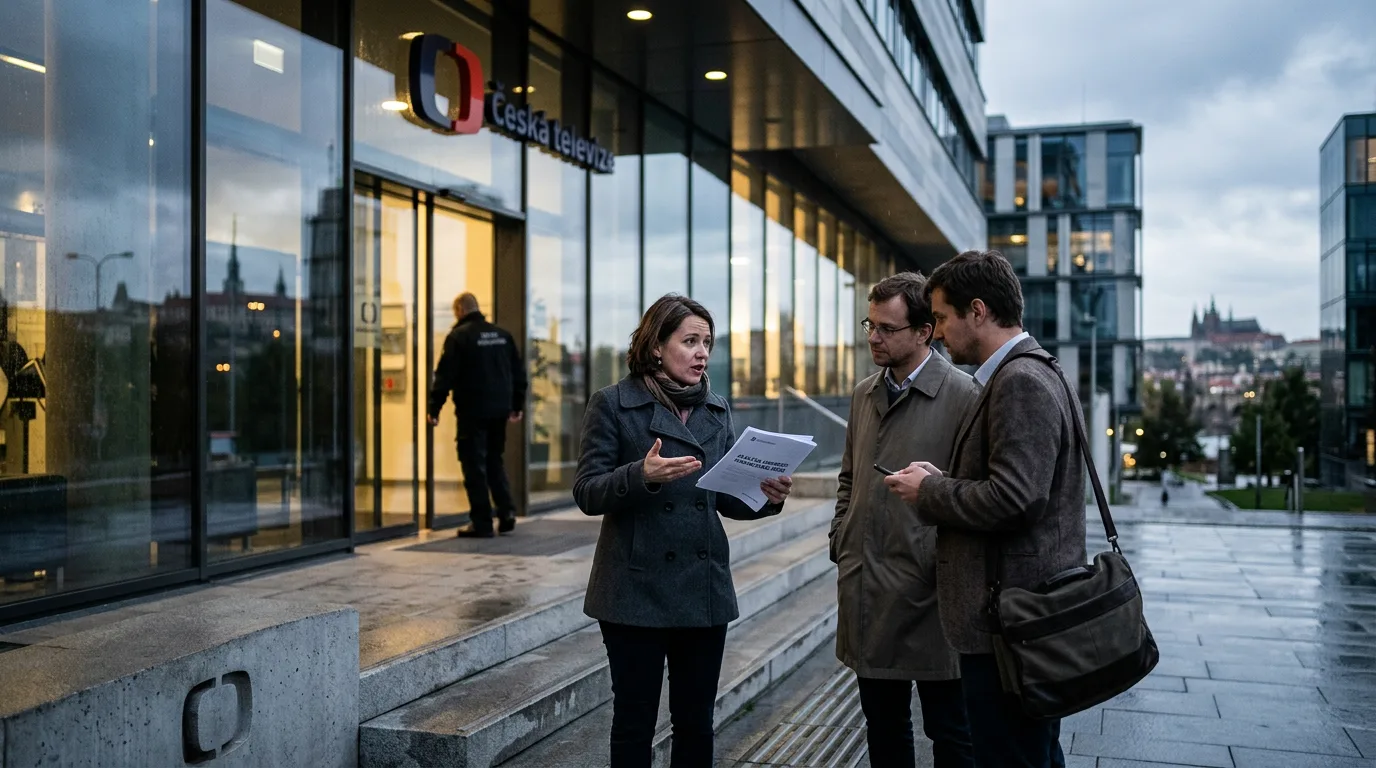
A new expert study by academics from three Czech universities warns against a fundamental change in the funding model for Czech Television and Czech Radio. According to the analysis, which compared systems in thirteen European countries, the existing system of radio and television fees is safer for the stability and independence of the media than tying them to the state budget. The weaknesses of the current model, such as administrative complexity, can be addressed by partial adjustments without systemic upheaval, according to experts.
The analysis, in which experts from Palacký University, Masaryk University, and Charles University participated, responds to government considerations about abolishing fees. According to the authors, the current state, supplemented by automatic inflation indexation, fully meets the requirements of the European Media Freedom Act (EMFA). This requires that the funding of public service institutions be predictable and protected from political pressures.
“Any potential reform should be based on clearly identified shortcomings of the existing system and a realistic evaluation of the transferability of foreign models. Any change should be the result of a long-term and inclusive discussion,” explains one of the authors, Marína Urbániková.
The study examines two main European models. Direct public funding shows better results in terms of political independence and transparency. In contrast, funding from the state budget is, according to experts, more sensitive to political cycles. Experiences from Spain, Slovakia, and Hungary show that this model can weaken long-term planning and media independence. While the state budget offers lower administration and potentially higher social justice, this is debatable in the Czech context due to the tax system settings.
The scientists presented three theoretical scenarios in case a change occurs: a flat household fee, a separate tax, or budgetary funding with constitutional safeguards. These safeguards should ensure that a broader parliamentary consensus is needed for a change in funding, not just a simple majority in the Chamber of Deputies.
The academic community's criticism comes at a time when the Ministry of Culture, led by Ota Klempíř, is preparing a bill to transfer media to the state budget. Concurrently, the government coalition proposes abolishing fees for companies and selected social groups (seniors over 75, people with disabilities). According to the management of Czech Television and Czech Radio, these steps in their proposed form could lead to a loss of up to 30% of current revenues, which would fundamentally limit their operational capacity.