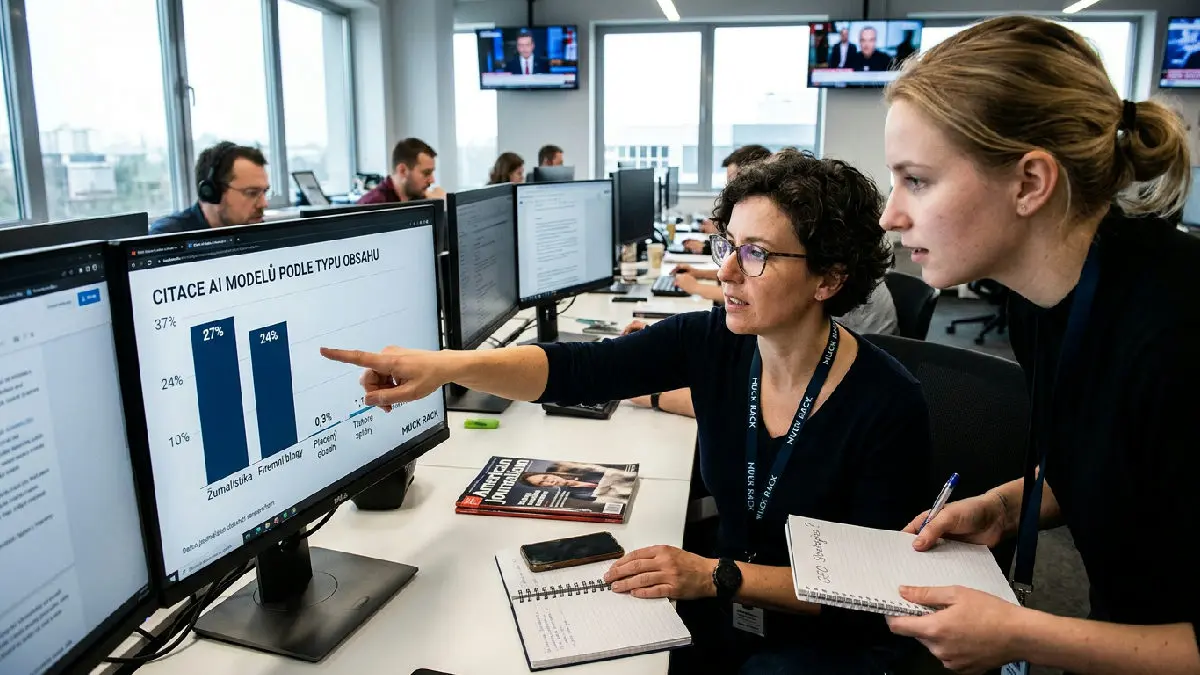
New data from Muck Rack reveals the mechanisms by which large language models (LLMs) and artificial intelligence (AI)-powered search engines draw their information. The analysis shows that journalism and editorial content remain the main pillar of citations for platforms like ChatGPT, while paid advertising is virtually non-existent in these systems.
According to statistics, journalism constitutes the largest category of sources with a 27% share. The timeliness of this data is particularly noteworthy – for citations with a known publication date, a full 57% of the content was published in the last 12 months. This confirms the growing importance of current news for training and responses of modern AI models. The second most significant group is corporate blogs and brands' own content (24%), followed by aggregators and encyclopedias (17.4%).
The report also defines fundamental differences between individual chatbots and their preferred sources of information:
ChatGPT largely relies on Wikipedia.
Claude prefers academic sources, especially the scientific database PubMed Central.
Gemini from Google most often draws from the discussion platform Reddit.
The analysis provides a clear answer to the question of the effectiveness of paid content in the era of generative AI search (GEO). Paid advertising and advertorials account for only 0.3% of all citations, while press releases are represented by just 1.1%. Overall, 99% of all links cited by AI platforms come from unpaid media sources.
For PR and communication professionals, this data means the necessity of a strategy change. Traditional mass distribution of messages without deeper context ceases to be effective.
“To succeed in this environment, PR professionals must be more targeted and strategic than ever before. Success will come to those who can be true partners to journalists in sharing compelling stories that serve both the audience and large language models.”
In addition to analyzing AI sources, the text also points to changing consumer habits in healthcare. Data from the Pew Research Center indicates that 40% of adults in the US seek health information from influencers and podcasts. This creates space for professional institutions to communicate their expertise understandably in the digital space and thus counter potential disinformation.