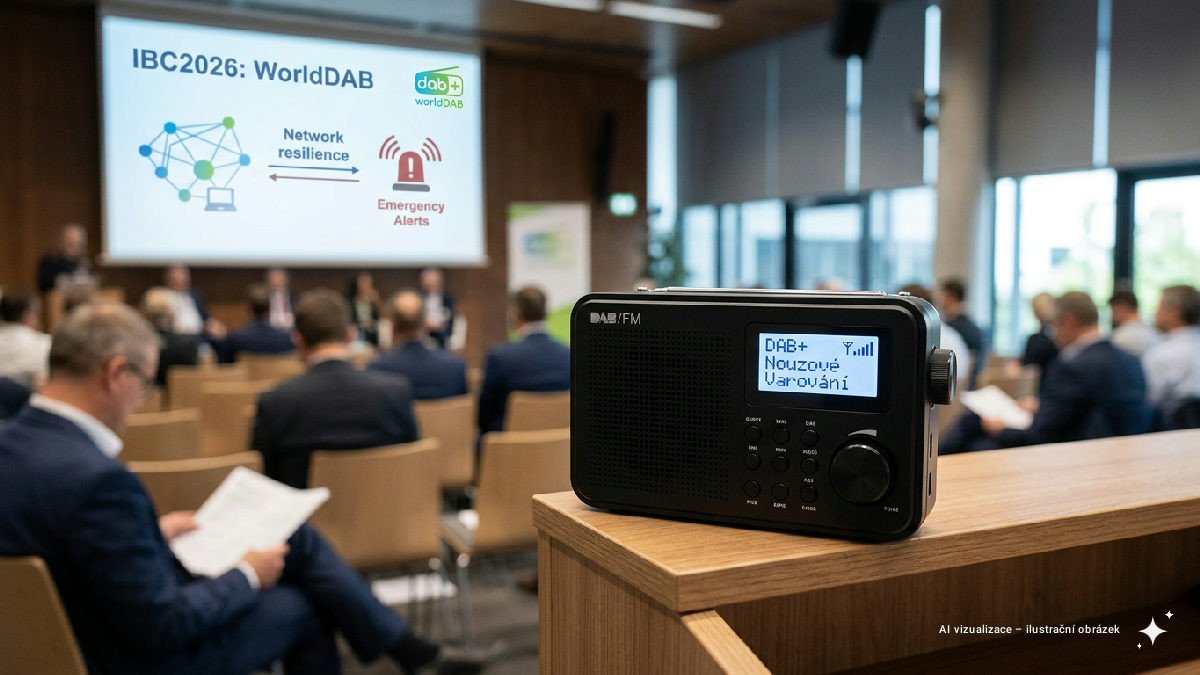
Against the backdrop of the Amsterdam exhibition grounds, where the world's broadcasting industry leaders gather annually, a crucial discussion about the future of the oldest electronic medium is brewing. WorldDAB and Broadcast Networks Europe have decided to join forces to highlight at IBC2026 that, in an era of digital transformation and security threats, radio broadcasting is taking on an entirely new significance. The main theme of their joint presentation will be radio resilience in crisis situations and within changing legislation.
The event is titled "Radio Moment: Resilient, Relevant, Irreplaceable" and aims to define radio's position in the modern media ecosystem. The organizers want to focus on why classic terrestrial broadcasting remains a critical pillar of state and citizen information security even in 2026. The entire expert session will take place on Sunday, September 13, 2026, in hall E102, from 2:30 PM to 4:00 PM.
Radio broadcasting will be presented at IBC2026 as a key element of national security due to its resilience and ability to warn the public.
Emergency Warning Systems are a Priority
One of the strongest points of the program will be the issue of public emergency warning systems. At a time when internet networks and mobile operators are susceptible to overload or targeted outages, radio broadcasting, thanks to its architecture, remains the most reliable channel for distributing critical information. Experts will focus on how DAB+ digital technology further expands and enhances these capabilities.
In addition to the technical aspects of warning, delegates will also address digital migration, the process of transitioning from analogue broadcasting to more modern standards. This process is not only a technological change but requires close cooperation between government administrations, network operators, and broadcasters themselves. The conference in Amsterdam is intended to serve as a platform for sharing experiences from various European countries that are at different stages of this transition.
The main thematic pillars of the Amsterdam session include:
- Legislation and Policy — the current legal framework and regulation of the broadcasting market in Europe.
- Emergency Warning — the deployment of radio as a primary tool for crisis communication with the public.
- Digital Migration — strategies and technical procedures for abandoning the analogue FM band.
- Media Relevance — evidence of radio's indispensability in the digital age.
Moderation and Expert Oversight
The entire program will be led by Bernie O’Neill, Project Director of WorldDAB. She will not only produce the entire session but also moderate the discussion. O’Neill has long advocated for the standardization and development of digital radio worldwide, and her participation thus guarantees a high professional level for the entire afternoon in hall E102.
Emphasis will also be placed on how broadcasting networks in Europe can cooperate to ensure broadcast continuity even during extreme events. This cooperation between technical entities and policymakers is, according to WorldDAB representatives, essential for maintaining the stability of the media market. Entry to the event is intended for professionals from the ranks of technologists, media managers, and representatives of regulators.
The expert program in Amsterdam will be moderated by Bernie O’Neill, focusing on the digital migration process and the legislative framework of broadcasting.
Networking in the Ruby Lounge
After the official ninety-minute session concludes, the discussion will move to a more informal setting. Participants will have the opportunity to continue debates over networking coffee in the Ruby Lounge, located in close proximity to the conference hall. This space is intended to foster new partnerships between European broadcasting networks and technology providers.
The question remains how individual national governments, for whom spectrum management is a strategic matter, will respond to the proposed changes and calls for resilience. IBC2026 on Sunday, September 13, is thus likely to offer concrete answers on the direction radio digitalization will take in the second half of this decade and what technical standards will dominate in the coming years.