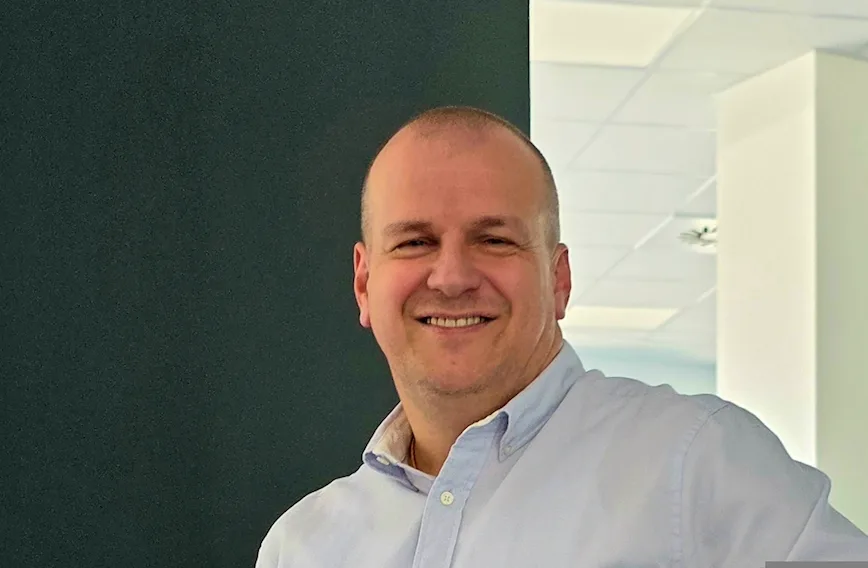
According to Mayor Jiří Zajac, Prague 14 is undergoing a fundamental transformation, aiming to make the district a full-fledged place to live. Investments in education, the development of community centers, affordable housing, and care for seniors play a key role in this. He emphasizes that Prague 14 must not remain just a "dormitory," but a place with a functioning community, services, and quality public space. In politics, he considers cooperation crucial – the ODS is therefore entering the municipal elections in alliance with TOP 09. "The alliance makes sense, but not at any cost," says Zajac in an interview, adding that the goal is stability and the ability to bring projects to completion.
Mr. Mayor, you grew up in a family where emphasis was placed on responsibility and firm values. What from this background shaped you the most for public service?
My father was a police officer and he raised us to be honest and responsible. But as a child, I wasn't the most obedient and often went my own way. Not always the easiest one. It was my own mistakes and falls that taught me how important it is to stick to principles and rules. Today, I draw on them in public office.
You've lived in Černý Most practically your whole life. What is your personal relationship with Prague 14 and why is it not just a "work address" for you?
I grew up in a developing housing estate at a time when the area around Černý Most sometimes resembled the outskirts of a city more than Prague itself. My friends and I spent most of our time outside and watched as further stages of the housing estate gradually emerged. These transformations have left a strong mark on me over almost forty years. That's why I want Prague 14 to be a good place to live – not only for me but also for my children. That was one of the reasons why I entered politics.
You often say that politics should be a service. When did the moment come when you decided to enter municipal politics?
About thirteen years ago, when I served as the chairman of a housing association. The more I came into contact with local politicians, the more I felt that some things could be done better. After several experiences, both positive and negative, I decided to run. I spent my first term in opposition, learning how local government works. Gradually, I went through committees and boards, until I became mayor in the previous term. I then managed to defend my mandate.
Are you going to defend your mandate again this autumn?
Yes. In April, I was elected as the leader of the candidate list, which I see as both a commitment and support to continue the work in progress.
Do you know yet whether the ODS will run independently or in a coalition with another entity? On your Facebook profile, you called on citizens to vote, and it seems they prefer an independent candidacy.
It's true that the prevailing opinion among citizens was for the ODS to run independently, which pleases me. At the same time, it is often crucial to combine forces for electoral success. That's why we decided to run together with TOP 09, as we believe that in this case, the result can be stronger than the sum of the individual parties.
At the same time, I want to emphasize that such a merger must not be at any cost. If the demands of individual partners were unrealistic or didn't make sense, an agreement would not have been reached. However, in Prague 14, we managed to find common ground.
Another important argument is current practice. For a long time, cooperation between city districts in Prague worked very well, partly because sixteen out of a total of twenty-two were led by ODS mayors. This created a stable environment in which no one disrupted the functioning of the city councils, and projects and management worked effectively not only among the mayors themselves but also towards the citizens.
The purpose of cooperation is therefore not to fragment forces, but on the contrary, to unite them where it makes sense. Only then can specific goals be pursued, for example: expanding school capacities so that children do not have to travel complicatedly, or building facilities for seniors and quality public space. Fragmentation, on the other hand, often leads to post-election negotiations and compromises that rather hinder the implementation of projects.
You are a mayor, an entrepreneur, a husband, and a father of four children. What is Jiří Zajac like at home? Is he also "Mr. Mayor" at home, or rather a dad and partner who can relax from politics?
Frankly, I have never learned to find the ideal balance between politics and family life. One simply brings work worries home. I try to balance it on weekends and during holidays, when I make up for the time I spend during the workweek on committees, councils, commissions, boards, and other activities related to the development of Prague 14.
In addition, I try to maintain the business I started building 25 years ago. Most importantly, I try to be an exemplary father and husband.
In the public sphere, people know you primarily as a politician. But what do you like to do in your free time when you put aside official duties? What recharges your energy?
Sports. From a young age, I was involved in martial arts and football; I played for TJ Kyje. Today, football is not as intense, but boxing and weightlifting have remained with me. In recent years, I've also added table tennis, partly thanks to the Mayor's Cup tournaments.
Prague 14 is undergoing dynamic development – housing, transport, security, public space. What are you most proud of in your work so far, and what do you consider your biggest challenge for the future?
Understandably, I am most proud of unique projects that are not often seen elsewhere. Since the beginning of my tenure on the Municipal Council, my colleagues and I have not shied away from challenges. We have completely tried to reconstruct all schools (insulation, green roofs, recuperation, canteens, and kitchens) to the tune of hundreds of millions of crowns. The construction of community centers in Hloubětín (H55), Černý Most (Plechárna), and Kyje, Hostavice, and Hutě is another area where continuous work is visible. Among the most visible challenges were the reconstruction and expansion of the Bojčenková senior home, the multifunctional building with a modern city library, and the cooperative construction of Broumarská. Such projects will be very hard to find elsewhere in Prague.
When we look at Prague 14 in ten years – what do you want to leave behind for future generations? What is Jiří Zajac's vision for "Prague 14 of the future"?
One from which people do not leave across generations. My vision for the coming years is clear: to transform Prague 14 from a transit and residential zone into a full-fledged urban environment. Housing estates must not be just dormitories. People must have a place to return to, not only to sleep, but for services, community, and quality public space. I would like people to truly live here. This means addressing what is important: safety, parking, but also the range of services and community life.
You often emphasize the community dimension of politics. What have you learned about people and their real needs from meeting with residents of Prague 14?
We have a representative democracy, and I am convinced that politicians should perform their functions with maximum responsibility. Even when I started managing the homeowners' association, I often heard: "We elected you to make decisions and take necessary steps, not to ask us every month whether we want mailboxes inside or out, and what the stairs should be like." In my opinion, this analogy well describes my view on politics.
If someone does their job well, people will re-elect them. And if they feel they could do better, they can – and should – run themselves. I am not a supporter of a management style where a politician tries to avoid responsibility by asking about everything, hiding behind surveys, or behind the opinions of a few vocal individuals from public hearings.
Of course, it is important to perceive the opinion of the people whom a specific problem concerns. However, my experience is that often the same people, sometimes not even from that locality, attend such meetings. The majority of residents only become interested in what is happening when it is too late. During the process, two or three people speak up – often no one. But once projects, especially constructions, start to be implemented, petitions and protests appear, in the style of: "Let them build, but not near us."
A typical example is housing. According to all statistics and surveys, this is one of the biggest problems, especially in Prague. People are calling for new apartments, but as soon as construction is to begin in their vicinity, concerns arise – deterioration of comfort, lack of school places, traffic complications. This is the reality we face every day in municipal politics.
If you had to name three values that define you as mayor, what are they and how are they reflected in your decision-making?
Telling the truth, keeping my word, and helping people. The most important thing for me is to keep what I promise. I radically never promise anything I cannot fulfill. That is what I value most. I also try, if at all possible, to offer the experience I have gained over decades, especially in the housing and property sector. I don't want it to sound like a cliché, but the police motto "to help and protect" is closest to me. I have tried to help or advise everyone who has turned to me. I try to see things through to the end, not to leave unfinished work, and to pursue my goals until the very end; the motto that describes me is "better dead than second."
What keeps you in politics even in difficult times?
A sense of responsibility. Whenever I think about quitting – it's not often, but it has happened a few times – I realize that someone simply has to do this job. I don't want to be the one who just criticizes but doesn't get involved in anything themselves.
If people left under pressure or in difficult moments, eventually no one would be left to do politics. And I'm afraid that only the incompetent or the "capable of anything" would remain. That's not something I would want to regret one day. That's why I always tell myself it still makes sense to continue.
When you say "Prague 14 is my home," what comes to mind first?
My childhood and the future of my children.