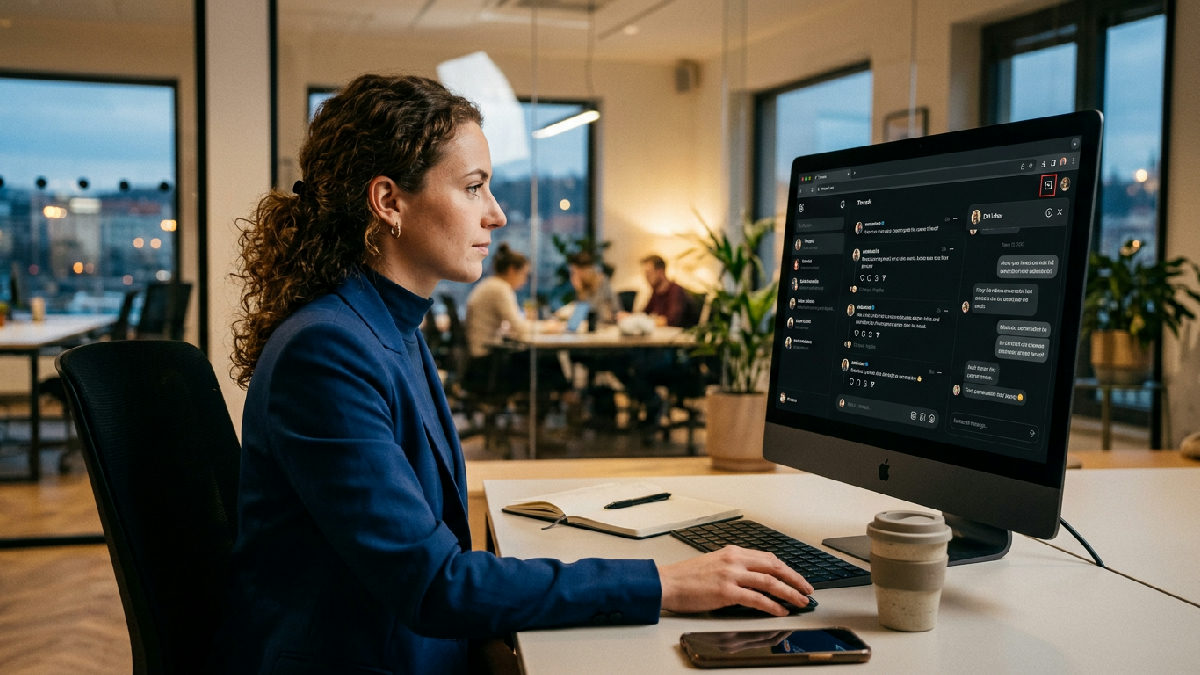
The social network Threads, owned by Meta, has taken another step towards independence from its parent platform Instagram. It now allows users to access direct messages (DMs) directly within the web browser interface. This feature, which the community and marketing professionals had been calling for, was previously only available through the mobile application or via the linked inbox on Instagram.
Although Threads still does not have its own independent messaging system and technically still uses Instagram's infrastructure, the desktop integration fundamentally changes user comfort. A new envelope icon has been added to the top of the web interface, which opens a list of conversations. Users can now reply to messages without having to leave the browser or reach for their mobile phone, which was previously one of the platform's main shortcomings when working on a computer.
For social media managers and brands, this update represents a significant streamlining of work. The ability to manage communication with the audience from the desktop allows for better integration of communication into daily workflows. This speeds up response times and facilitates the management of multiple conversations at once, which is crucial for maintaining engagement on growing profiles.
In addition to basic text messaging, the web interface also supports sharing posts and media. The update comes at a time when Meta is trying to make Threads a full-fledged competitor to the X network (formerly Twitter). The absence of advanced desktop features had long been a target of criticism from more demanding users who use the platform for professional purposes.
According to platform representatives, this step is part of a broader strategy to unify the user experience across devices. Although the feature is being gradually rolled out globally, some users may experience a slight delay depending on the region. With this move, Meta confirms that it intends to continue investing in the development of the web version of Threads to meet the needs of users who spend most of their working day at computers.