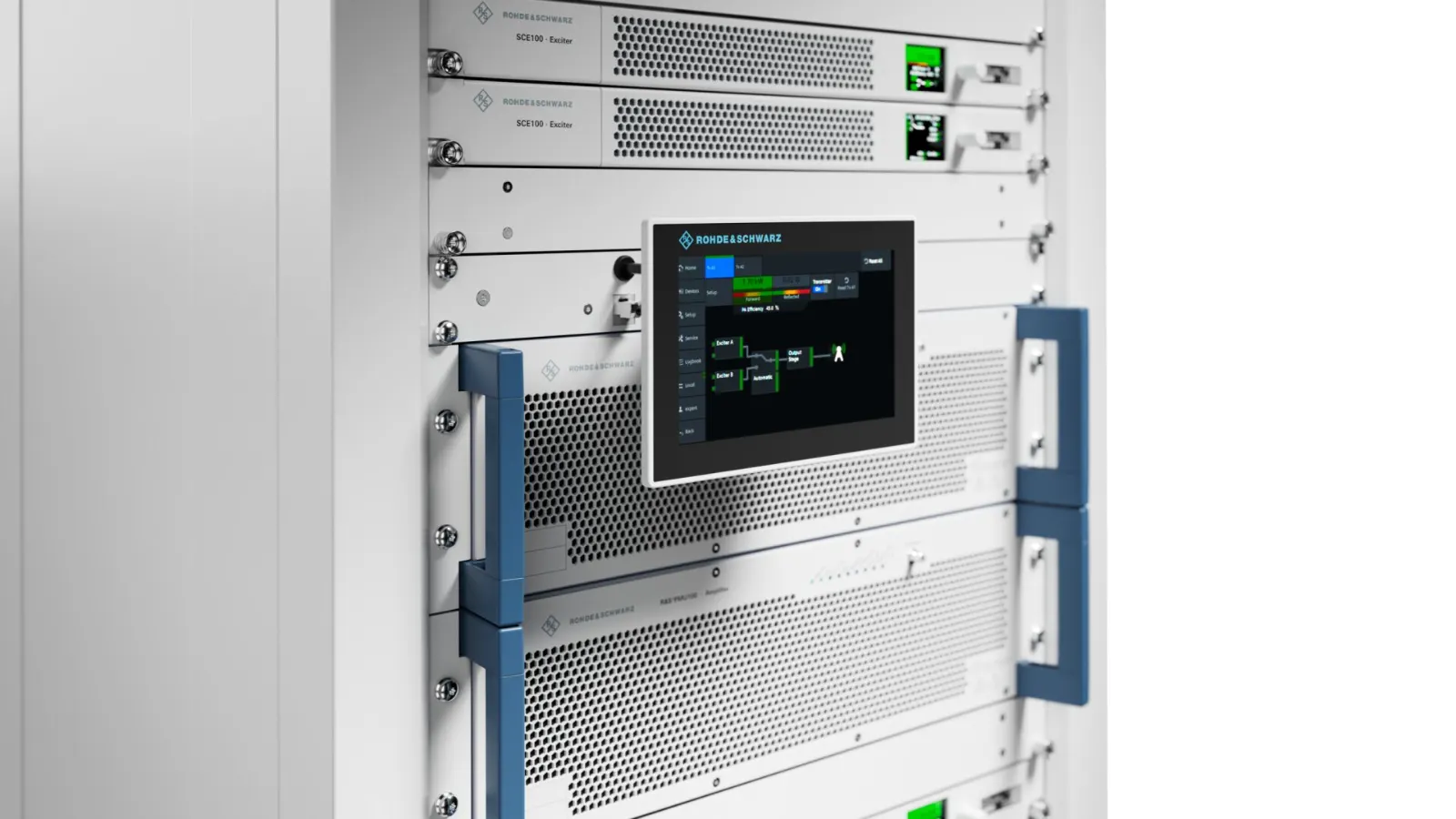
The exhibition halls in Amsterdam became the scene of a premiere on September 11, 2026, with the ambition to redraw the map of television broadcasting. Rohde & Schwarz publicly showcased its new air-cooled medium-power UHF transmitter, designated R&S®TM1, for the first time at the prestigious IBC 2026 trade fair. The device, which immediately impresses with its compact design, houses technologies ready for the advent of a new generation of mobile and interactive services.
The TM1 model was not developed merely as another link in the chain, but as a direct response to the growing pressure for energy efficiency and cybersecurity. The manufacturer focused on high system availability and native support for NextGen TV standards, aiming to ease the transition for operators to more modern forms of content distribution. The device covers power levels from 600 W up to 6.5 kW, making it a versatile tool for various types of broadcasting networks.
The air-cooled UHF transmitter R&S®TM1 covers a power spectrum from 600 W to 6.5 kW while maintaining maximum energy efficiency.
Native Support for 5G Broadcast and ATSC 3.0
One of the key arguments for deploying the new technology is its future-readiness without the need for additional hardware investments. The transmitter features native support for 5G Broadcast and ATSC 3.0 standards. This integration allows network operators to immediately implement innovative business models that were previously not feasible within the traditional UHF band.
Thanks to the technological foundation in TM1, operators can launch these services:
- Mobile Television — stable reception of television signals directly on mobile devices without requiring a SIM card.
- Targeted Datacasting — efficient distribution of data packages to specific user groups.
- Interactive Formats — connecting traditional broadcasting with two-way functions for viewers.
In addition to functional flexibility, engineers also focused on operational automation. R&S®Auto-Doherty technology is utilized, which optimizes the transmitter's performance in real time for every operating point. This ensures that the device always operates at the highest possible efficiency, thereby minimizing waste heat and electricity consumption.
Modernization Without Replacing Entire Infrastructure
Rohde & Schwarz introduces a concept considered groundbreaking in the industry – the possibility of renewal of existing systems. Operators already using the previous generation of TMU9 transmitters do not need to invest in a complete new build. The TM1 renewal program allows existing equipment to be upgraded to the full functionality and performance of the modern TM1 series in a cost-effective manner.
The TM1 renewal program significantly reduces the time and financial costs of network modernization by extending the lifespan of existing equipment.
This approach drastically reduces not only capital expenditures (CAPEX) but also space requirements in technical facilities and installation time. By extending the operational cycle of existing hardware, the company directly contributes to sustainability and reducing the carbon footprint in the critical infrastructure segment. From a security perspective, the system is built on Secure by Design principles, which helps operators meet stringent cybersecurity requirements placed on both state and private broadcasting networks.
„The R&S®TM1 is a future-proof solution that combines uncompromising RF performance with high sustainability. Through TM1 renewal and native support for 5G Broadcast and ATSC 3.0, we help network operators immediately reduce their operating costs and carbon footprint, while simultaneously establishing the technological foundation for tomorrow's revenue streams,“
Economic Impacts and Future Outlook
The presentation of the TM1 transmitter at IBC 2026 sends a clear signal to the market that the era of fixed broadcasting formats is ending. Operators now face the opportunity to transform their networks into multi-format platforms that will serve both traditional television receivers and a new generation of mobile devices. The significant reduction in operational expenditure (OPEX), achieved through energy consumption optimization, can be a key factor for many to survive in a competitive media environment.
While technical specifications and upgrade possibilities are already known, precise delivery dates for individual regions and specific price ranges for different power configurations will likely be subject to further negotiations. However, it is clear that with the TM1 model, Rohde & Schwarz is betting on long-term sustainability and technological convergence to ensure the stability of critical broadcasting infrastructure for years to come.