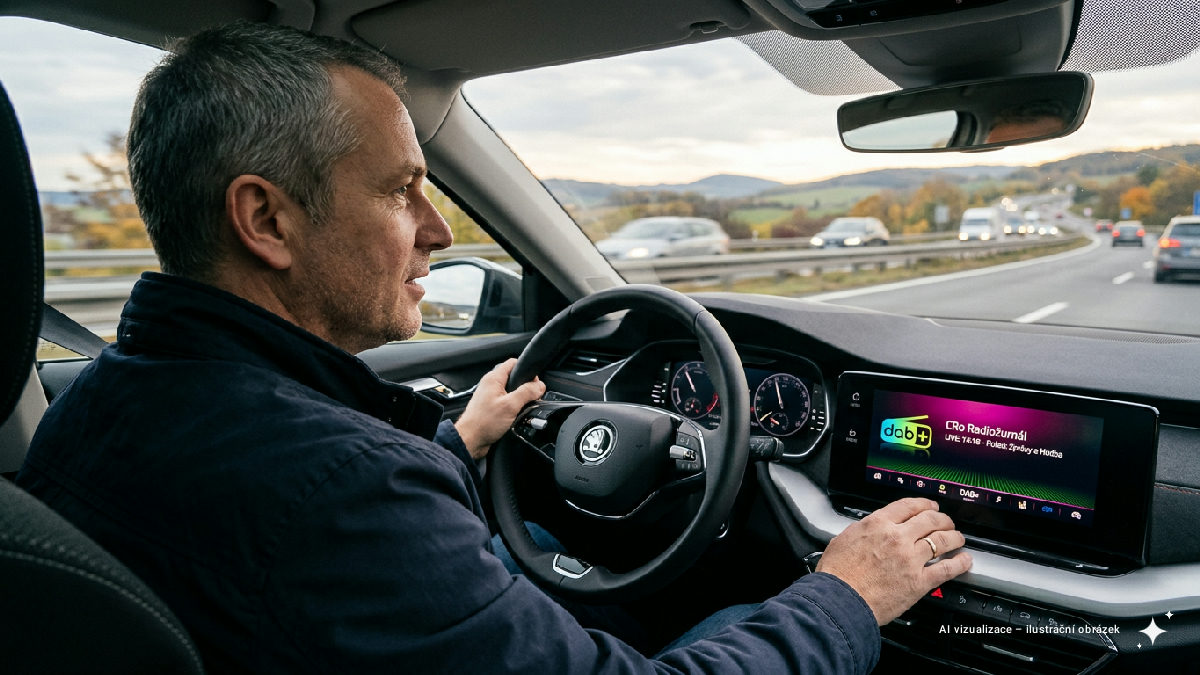
When a driver gets behind the wheel and starts the engine, one of the first automatic actions is often to turn on the car radio. Although the media world is changing dramatically, the car cabin remains the last great sanctuary for traditional radio broadcasting. It is here, amidst engine noise and traffic monitoring, that radio maintains its dominant position, which now serves as the main driver for the mass adoption of modern DAB+ technology.
Current data confirm that in-car listening, even in the middle of the third decade of the 21st century, is the most popular way for people to consume audio content. This opens up a unique space for digital terrestrial broadcasting, as this technology is now standardly integrated into almost every new vehicle leaving the production line and heading to European customers.
The Netherlands as a European Litmus Test
A striking example of this trend is the Dutch market, where the popularity of the classic format is not declining. Of all Dutch residents who are regular radio listeners, a full 58 percent use car radio for this purpose. This figure underscores the fact that mobility and radio form an inseparable pair in the public eye.
In the Netherlands, 58 percent of all active listeners use car radio to listen to broadcasts.
The high proportion of in-car listeners directly supports the development of DAB+. While in homes, digital radio has to compete with smart speakers and streaming services, in cars it is a natural choice. For users, this means clearer sound, a wider range of stations, and signal stability even on longer journeys across regions.
The Breakthrough Year 2020 and European Legislation
The current dominance of digital reception in cars is not accidental. It is backed by a strategic decision at the European Union level that fundamentally changed the electronics market. The key date was December 21, 2020. From this day, a regulation came into force that changed the mandatory equipment for all new vehicles placed on the EU market.
Mandatory technological equipment for new vehicles includes these parameters:
- Mandatory integration — every new passenger car must have a built-in receiver for digital terrestrial radio.
- Terrestrial reception — the system must be able to process digital signals broadcast over the air, not just via data.
- DAB+ standard — in Dutch and European practice, this obligation has become synonymous with DAB+ technology.
This legislation ensured that DAB+ technology did not remain just an add-on for tech enthusiasts but became a universal standard. Every buyer of a new car thus automatically gains access to digital broadcasting without having to invest in additional equipment or complex installation.
Since December 2020, all new cars in the EU must allow for digital terrestrial reception, which in practice means DAB+.
The Future of Radio on the Road
The connection of traditional radio content with digital distribution in cars creates a stable ecosystem. For broadcasters, this is a clear signal to invest in content for DAB+, as their audience in cars is technically prepared. In the Netherlands and other EU countries, the era of analog reception in transport is thus gradually coming to an end.
Although the source text does not provide specific data on the complete shutdown of older analog FM transmitters, the technological renewal of the vehicle fleet naturally strengthens the position of digital. With each passing year, the number of cars on the road that fully support digital reception increases. Radio on DAB+ waves is thus evolving from an alternative to the mainstream, defining modern travel.
An open question remains how quickly the vehicle fleet of older models lacking a digital tuner will be renewed. However, the new car market speaks clearly: the future of in-car listening is digital, stable, and accessible to every new car owner across the entire European Union.