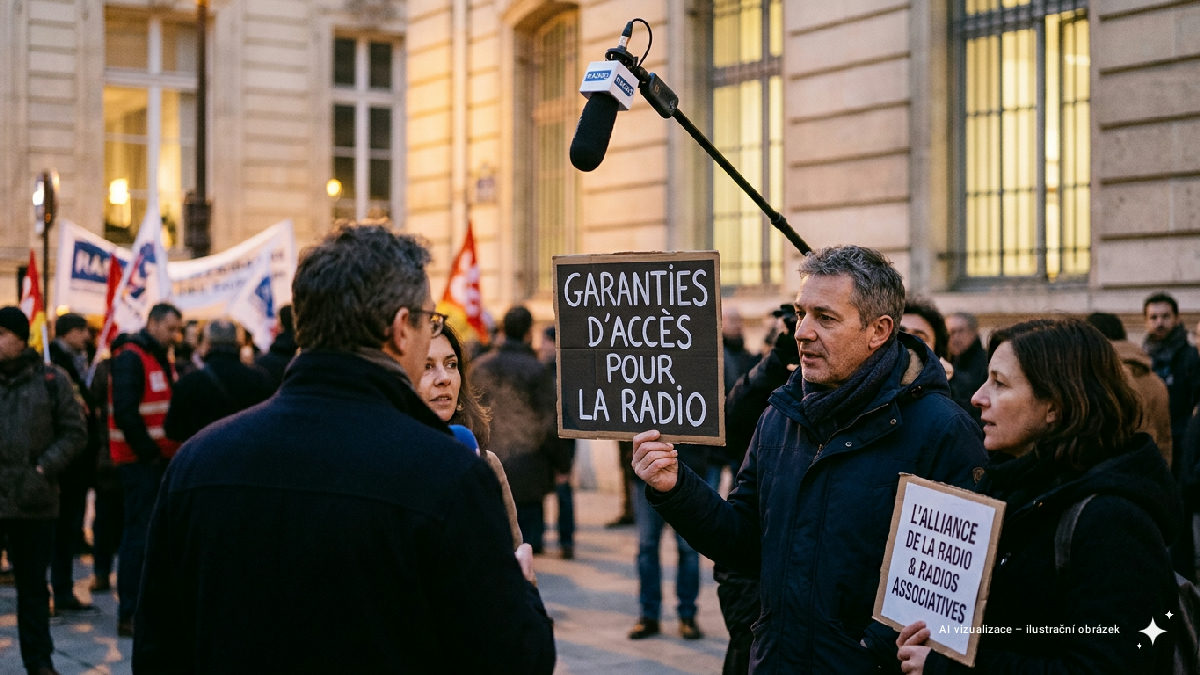
Imagine a situation where mobile networks and internet connectivity cease to function due to extreme weather. In such moments, a car becomes the only refuge for many people to obtain vital information. The French radio sector is now warning that this certainty is under threat, as some car manufacturers are beginning to remove traditional receivers from dashboards or charge for their functionality.
In a joint statement issued on September 21, 2026, the largest market players united: public broadcaster Radio France, the professional organization Alliance de la Radio, and representatives of associative stations Les Locales. Together, they are urging the government to legally guarantee free and direct access to terrestrial broadcasting in all types of vehicles. The reason is the growing trend for car manufacturers to offer radio only as a paid option or replace it with streaming platforms dependent on data connectivity.
Radio is not an optional extra, but a key safety element that must remain freely accessible even in the most modern cars.
Safety Risks and Lessons from the Past
The main argument for preserving analog FM and digital DAB+ broadcasting is the system's resilience in crisis situations. The document refers to recent fires in the Gironde department, where the blaze destroyed 80 kilometers of fiber optic cables and 1,200 telecommunication poles. In this area, more than 520,000 households and businesses lost connectivity, with radio waves remaining the only functional way to distribute warnings.
A similar experience comes from April 2025 in Spain. During a widespread power outage, most mobile operator transmitters stopped working after just 20 minutes, once their backup batteries ran out. Mobile phones became unusable, while terrestrial radio broadcasting continued to inform the public. The General Secretariat for Defense and National Security (SGDSN) confirms that car radio is an indispensable civil protection tool in such times.
Legislative Battle on Two Fronts
Radio representatives are now pressuring lawmakers to ensure that media access does not depend on commercial agreements between car manufacturers and technology giants. The fight for dashboard space is currently unfolding on two levels, which are intended to define the mandatory equipment of new vehicles.
Radio stations are demanding concrete steps:
- European regulation — Enforcing the obligation to equip all new passenger and commercial vehicles with FM and DAB+ receivers within the framework of the currently negotiated Digital Networks Act.
- French law — Supporting Article 2 of the draft law on radio modernization, proposed by Senator Laurent Lafon, which enshrines this obligation at the national level.
- Visibility in the menu — Ensuring that the radio has either a physical button or is located on the first page of the vehicle's multimedia system.
During Spain's power outage, phones went silent, but car radios kept talking, confirming radio's role as a crisis safeguard.
Voices Across the Radio Market
The rare consensus between the public and private sectors underscores the seriousness of the situation. Alliance de la Radio represents commercial giants such as RTL, NRJ, Europe 1, and Skyrock, listened to daily by three out of four listeners in France. On the other hand, there is Radio France with over 14 million daily listeners, and the network of 790 community stations Les Locales, which provide information coverage even in the most remote regions.
„L’accès des Français à la radio ne peut pas dépendre d’un accord commercial entre un constructeur automobile et une plateforme de streaming. C’est au législateur de le garantir, pas au marché. Sur ce point, service public et radios privées parlent d’une seule voix“
Constance Benqué, présidente de l’Alliance de la Radio
What's Next
The sector is now awaiting the response of the French government and the Ministry of Culture to the ongoing European consultation on the Digital Networks Act. A key moment will also be the discussion of draft law No. 743 for the 2025–2026 period in the Senate. Operators warn that if the state does not intervene, the car without a free receiver will become a "blind spot" for French security, which could have tragic consequences during future natural disasters.