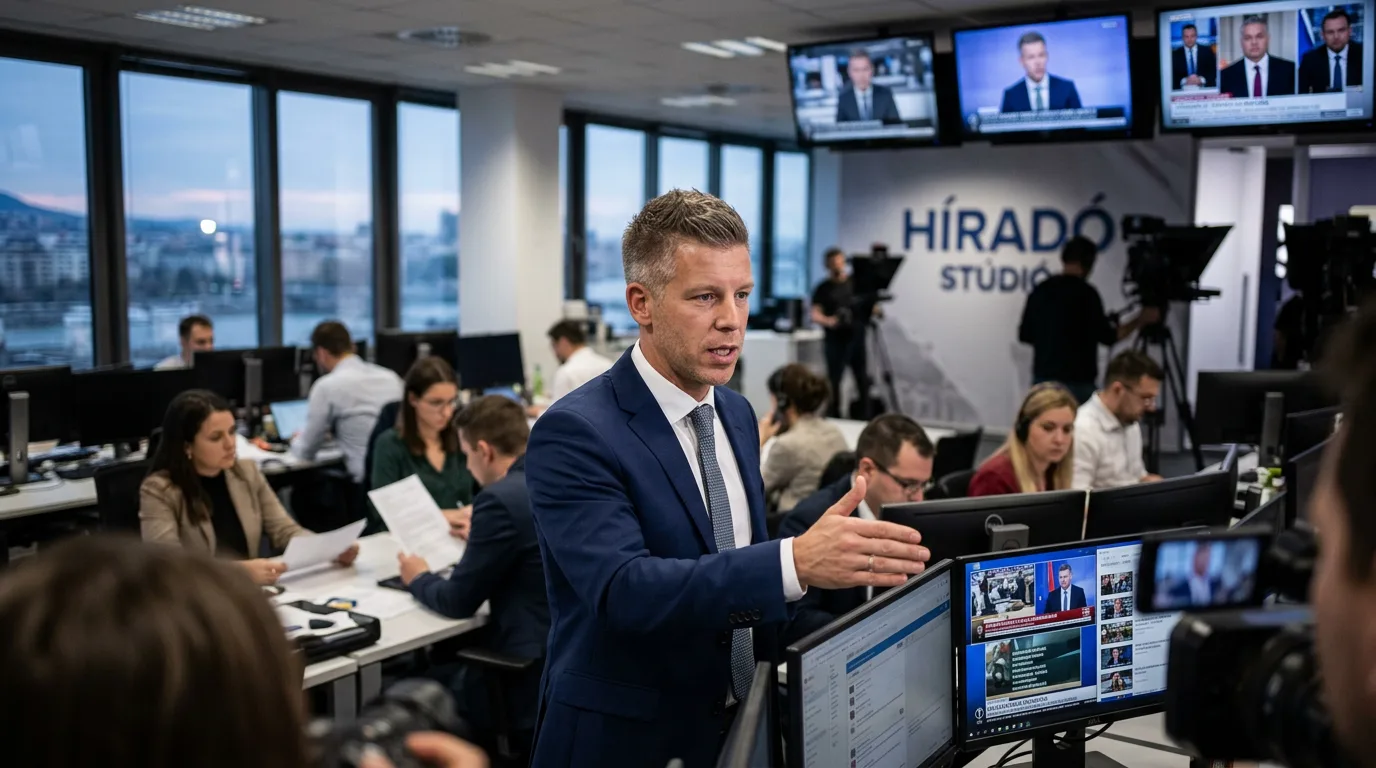
The winner of Sunday's parliamentary elections in Hungary and likely future Prime Minister Péter Magyar, whose Tisza party secured a constitutional majority, announced his intention to fundamentally reform the country's public media. The goal of the changes is to restore their independence and credibility after 16 years of Viktor Orbán's government. Magyar stated this in an interview with Kossuth Rádió, which has until now been controlled by the state.
The planned reform is intended to directly address the current situation, where public television, radio, and the MTI news agency were merged into the MTVA group. Critics and the opposition have long described this as a tool of government propaganda. Magyar stated in the interview that every citizen deserves media that broadcasts objective facts. As a radical step to rectify the situation, he proposes a temporary suspension of news broadcasts by public media until legislative and professional guarantees for independent journalism are established.
“Under Orbán, public television and radio lied from morning till night. I don’t seek revenge, but I want public media to broadcast the truth.”
Expected changes include the preparation of a new media law and the establishment of a new media office. According to Magyar, the current media management is attempting to feign independence after the Fidesz party's defeat, which he called unsustainable. The situation within the institutions is also evidenced by a revolt within the MTI news agency. According to Hvg.hu, 90 employees signed a declaration demanding an end to the censorship practices of news director Zsolt Németh and a return to impartial reporting.
According to international organizations, the previous Hungarian media landscape was heavily skewed. Reporters Without Borders states that four-fifths of Hungarian media are controlled by oligarchs associated with Viktor Orbán. A study by the Rubicon Institute further showed that while Orbán was portrayed positively in 95% of news reports, Magyar faced negative context in 96% of cases. In addition to media reform, the new government also plans to address energy security and fuel supplies, which Magyar wants to discuss with the management of the MOL group.