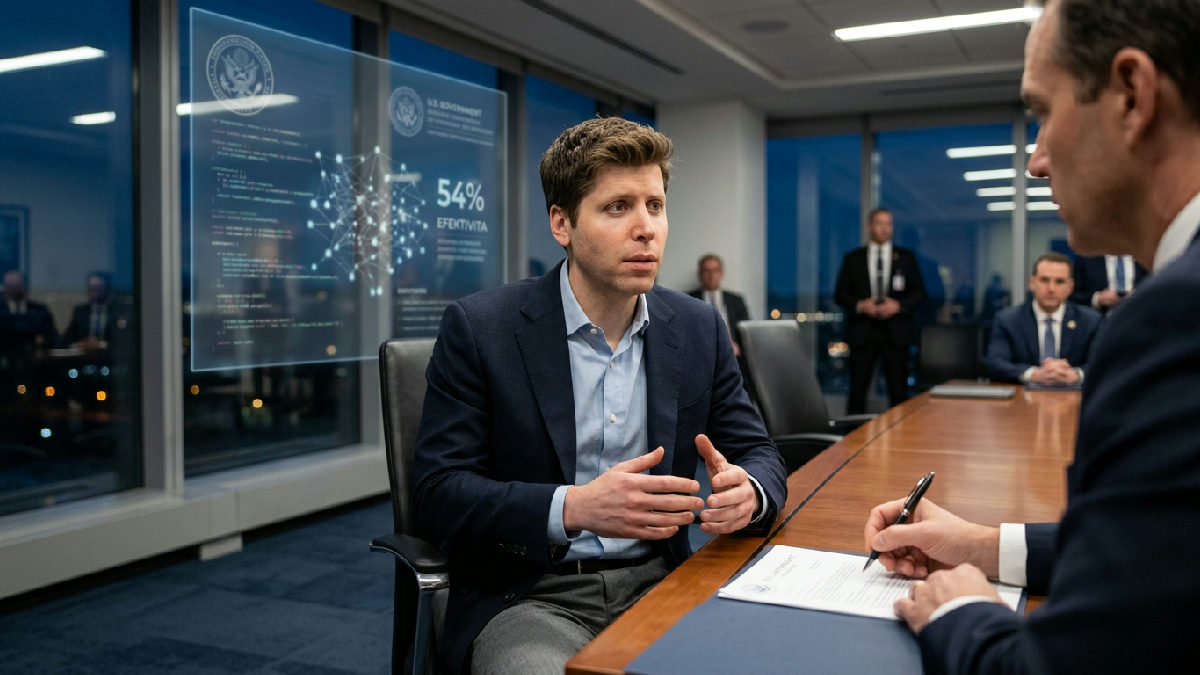
On Thursday, OpenAI officially launched the widespread operation of its latest series of models, designated GPT-5.6 Sol, Terra, and Luna. According to CEO Sam Altman, the flagship Sol model shows significant advancement in efficiency, which should help companies better control the costs of operating artificial intelligence. The market's reaction comes amid growing competition from Meta and SpaceX, who also introduced their innovations in the past hours.
The key parameter of the new GPT-5.6 Sol model, according to Altman, is 54% higher token efficiency in agent programming tasks. In an interview with CNBC, Altman stated that the model is "as good as or better" than any competitor on the market in this area. This shift in efficiency is crucial for commercial use, as businesses are increasingly focusing on the ratio between the costs incurred and the value that AI brings them.
The launch of the models was accompanied by close cooperation with President Trump's administration. OpenAI limited the initial testing phase to a narrow group of partners precisely at the request of the US government. Altman confirmed that the approval process involved regular dialogue with Secretary of Commerce Howard Lutnick, Secretary of the Treasury Scott Bessent, and National Cybersecurity Director Sean Cairncross.
“If you want broad access to powerful models, you have to be sure of your safety claims, otherwise the world will very quickly start to feel uncomfortable,” Altman said regarding government testing.
Speculations that the US government might acquire a 5% equity stake in OpenAI, however, were not unequivocally confirmed by Altman. Although he admitted ongoing negotiations with the administration, he described earlier media reports about specific share parameters as inaccurate. He also refused to specify the timing of the company's anticipated initial public offering (IPO), even though OpenAI has confidentially filed the relevant documents with regulators. The company's current valuation is estimated at 852 billion dollars.
Competitive struggle in the AI sector has intensified in recent days. Meta presented its Muse Spark 1.1 model on the same day, and SpaceX (which absorbed Musk's startup xAI) introduced Grok 4.5 on Wednesday. In this context, Altman warned about the growing quality of Chinese open-source models, but also emphasized that access to OpenAI technologies will remain global and will not unilaterally favor the USA.