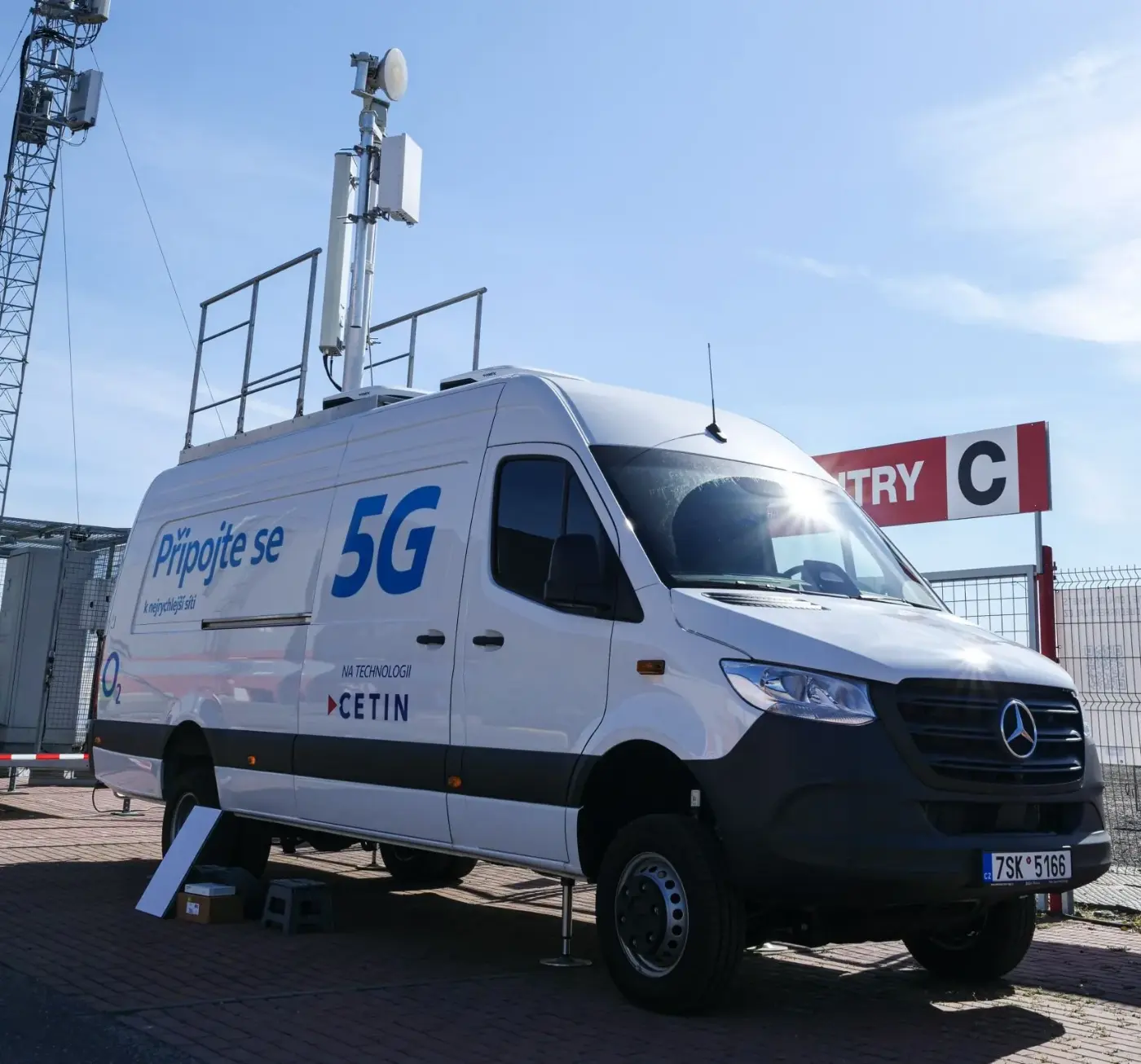
Telecommunication operator O2 Czech Republic, in cooperation with CETIN, is expanding its fleet with specialized equipment designed for crisis situations and mass events. A new Mercedes-Benz Sprinter 4×4 vehicle has been added to the fleet of mobile base stations (BTS), which stands out for its ability to operate in challenging terrain and its speed of preparation for operation. According to the company, it can transform into a full-fledged transmitter within two hours.
The new vehicle is designed to provide connectivity in areas with poor transport infrastructure or in areas affected by natural disasters. Thanks to all-wheel drive, the mobile tower is capable of transporting technology even to remote parts of the republic, where ordinary equipment fails. The operator states that investment in mobile BTS is part of a broader strategy to protect and strengthen the critical infrastructure of the state.
The use of these mobile units is crucial in several scenarios. The first are large cultural and sports events, such as festivals or exhibitions, where there is a sudden overload of the standard network. The second pillar is extraordinary events such as floods or tornadoes, where stationary transmitters are damaged. The third use is temporary signal coverage in municipalities in the event of technical failures of local transmitters or planned outages.
Currently, O2, through CETIN's infrastructure, has a total of 126 mobile base stations available. The company emphasizes that technology alone is only half the battle; the key factor is logistics and speed of deployment in the field.
“Technology alone is not enough. What also matters is how quickly we can get it where it's needed – that's why it's part of how we, as critical infrastructure, prepare for various scenarios,” the company states in a press release.
The new addition to the fleet is intended to ensure that even in the event of unexpected outages or extreme situations, the network remains accessible to emergency services and the civilian population. The modernization of technical facilities thus directly follows the operator's earlier commitments to maintain service continuity even in crisis conditions.