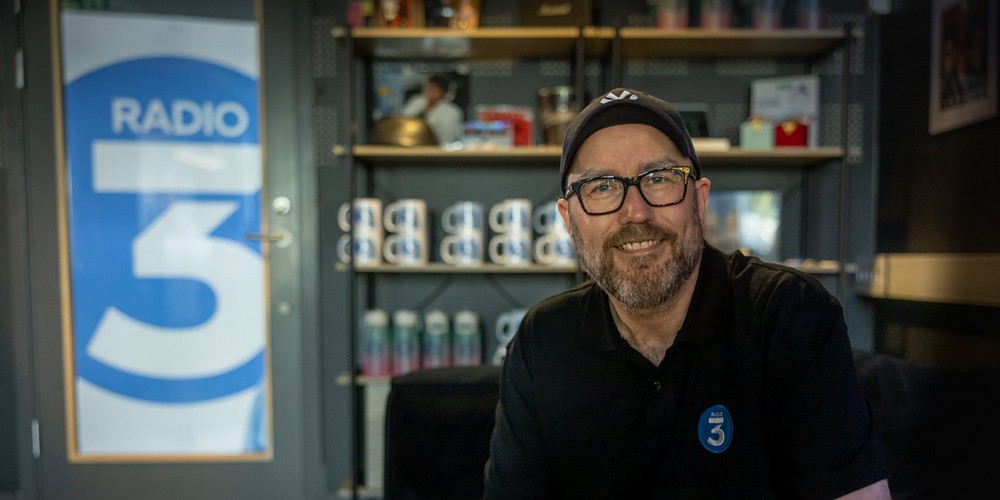
When the indicator lights on the digital standard DAB transmitters lit up in Norway's Østlandet region this week, it signaled the arrival of a new player in the media market. The station, named Radio 3, decided to go against the grain of strictly defined playlists and opted for a concept that combines familiar hits with unprecedented musical breadth. The project, backed by experienced radio veterans, targets listeners who still believe in classic radio as a medium but are tired of constantly repeating the same songs.
The new station began broadcasting on the Riksblokk II network, covering a significant part of Eastern Norway. The ambitious project is spearheaded by Frode Jacobsen and Lars Corleone Østli. Both founders are no newcomers to the industry, having gained experience at local stations such as Radio Fredrikstad or the original Radio 3 in Sarpsborg. Their roles in the new venture are clearly defined: Jacobsen handles marketing, digital strategy, and the station's visual identity, while Østli is responsible for the musical profile, programming, and editorial content.
Radio 3 broadcasts on the digital DAB network within the Riksblokk II block, covering a vast area of the Østlandet region.
Musical Dramaturgy Without the Dictation of Algorithms
At the core of the broadcast is music ranging from the late 1960s to contemporary productions. However, the project creators emphasize that their goal is to offer a broader repertoire than listeners are accustomed to from other commercial stations. Lars Corleone Østli, who has been active in radio since the early 1990s and also worked for the public broadcaster NRK (specifically NRK P1 and mP3), builds the program on his 35 years of experience.
According to the creators, Radio 3 is a response to long-term listener feedback, where people want music they know but refuse to hear the same songs over and over. While the station primarily positions itself as musical, it does not intend to forgo the human element. Throughout the day, presenters will appear with short segments, stories, and musical tidbits. The goal is to maintain direct contact with the audience, which computer algorithms alone cannot replicate.
The station draws from a music archive spanning from the late 60s to today, relying on a wider selection of tracks than its competitors.
The Human Voice as a Key Element
The station management places great emphasis on authenticity and current mood. Although modern technology allows for automated broadcasting, Radio 3 believes that a human behind the microphone can better react to the current atmosphere of the day, such as the specific mood of a Friday afternoon. Through this approach, they aim to differentiate themselves from purely streaming services and automated music streams that lack the human factor.
The strategy of the new station is based on several main pillars:
- Familiar hits — broadcasting proven songs that listeners love.
- Greater variability — including songs that haven't been in regular rotation for a long time.
- Human element — the presence of presenters and voice accompaniment for most of the day.
- Digital distribution — utilization of the Riksblokk II network for broad coverage.
A Philosophy Built on Tradition
The station's philosophy is inspired by the idea of the late radio creator Even Rognlien, who held the view that the role of radio is not to create hits but to play them. Radio 3 thus does not aim to dictate to listeners what they should like but wants to offer them more music with which they already have a connection. This approach is intended to appeal to a broad audience in the Østlandet region who remain loyal to radio as a medium.
The launch of Radio 3 comes at a time when the Norwegian audio market is dynamically evolving. While some projects, such as Schibsted's activities in Sweden, have not yet achieved great success, Radio 3 relies on a stable model of locally focused DAB broadcasting with a clear musical profile. It remains an open question how quickly the new station will manage to build a stable listenership amidst competition from established national channels and specialized digital stations.