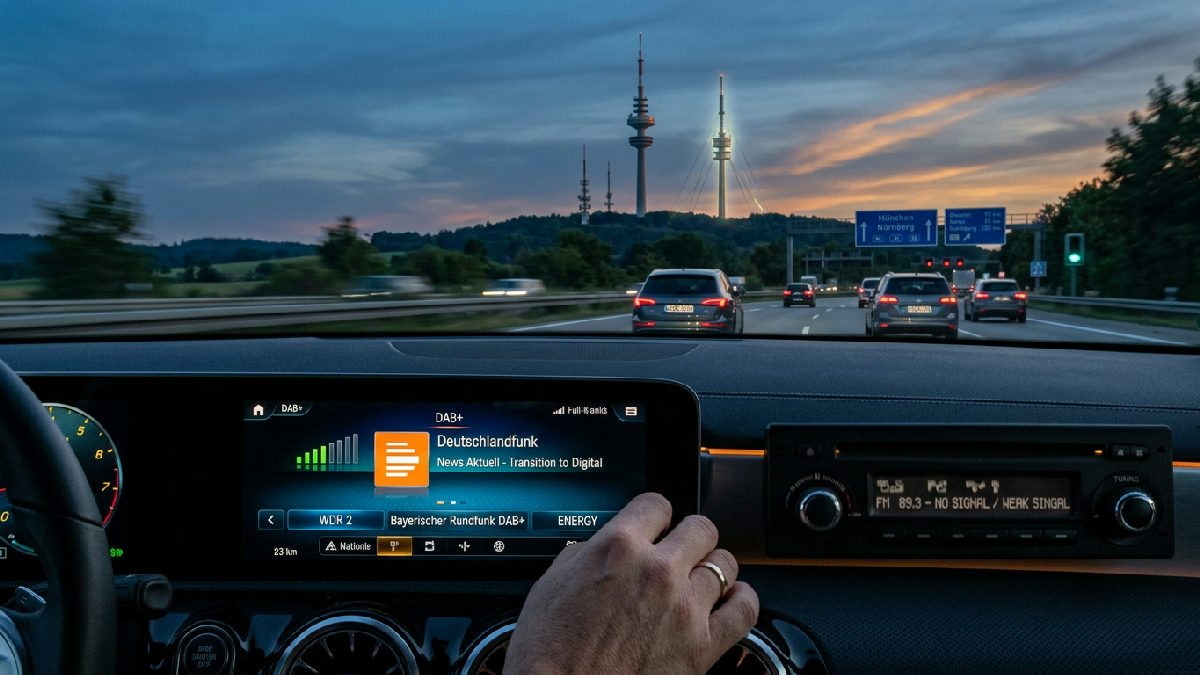
The German radio market is undergoing a fundamental transformation, clearly dominated by DAB+ technology. While classic FM broadcasting historically formed the backbone of the radio market, current data confirms that its importance among our neighbors is sharply declining. Digital radio has become the standard not only for technology enthusiasts but also for ordinary households and drivers.
According to the latest statistics, the sale of receivers supporting digital broadcasting has become a key market driver. The vast majority of new cars are already equipped with this standard, resulting from European legislation that enshrined the obligation to install a digital tuner in legal regulations. This step significantly accelerated the transition of listeners from analog to digital, where they are attracted primarily by cleaner sound and a wider range of thematic stations.
The End of the Analog Era is Nearing
Market analysts point out that FM radio is being sidelined. In many federal states, the share of digital listening has already exceeded the 50% mark, raising the question for broadcast network operators of how long it will be economically viable to maintain the simultaneous operation of both technologies. The costs of distributing an FM signal are significantly higher compared to DAB+, which is pushing private and public broadcasters to gradually switch off analog transmitters.
Developments in Germany are also closely monitored by neighboring countries, including the Czech Republic. The main advantages appreciated by German listeners include:
- High signal resistance to interference while traveling.
- Accompanying multimedia information on radio displays.
- The ability to receive regional stations that do not fit into the FM band.
- Lower energy consumption of broadcasting infrastructure.
Public Sector as a Digital Leader
The ARD radio network played a crucial role in the success of German digitalization, investing billions of euros in DAB+ infrastructure. As a result, signal coverage is now available throughout almost all of Germany, even in less populated areas. Commercial stations, which initially approached digital cautiously, are now following the trend and occupying available capacities in national and regional multiplexes.
“FM radio in Germany plays only a minimal role now. The future belongs to digital, which offers incomparably more possibilities for listeners and advertisers,” according to expert studies on the German market.
With the gradual decline of analog, the market share of FM is expected to continue to decrease by single-digit percentages annually. Germany is thus becoming a European leader, showing the way to a complete end to analog radio broadcasting within the next decade.