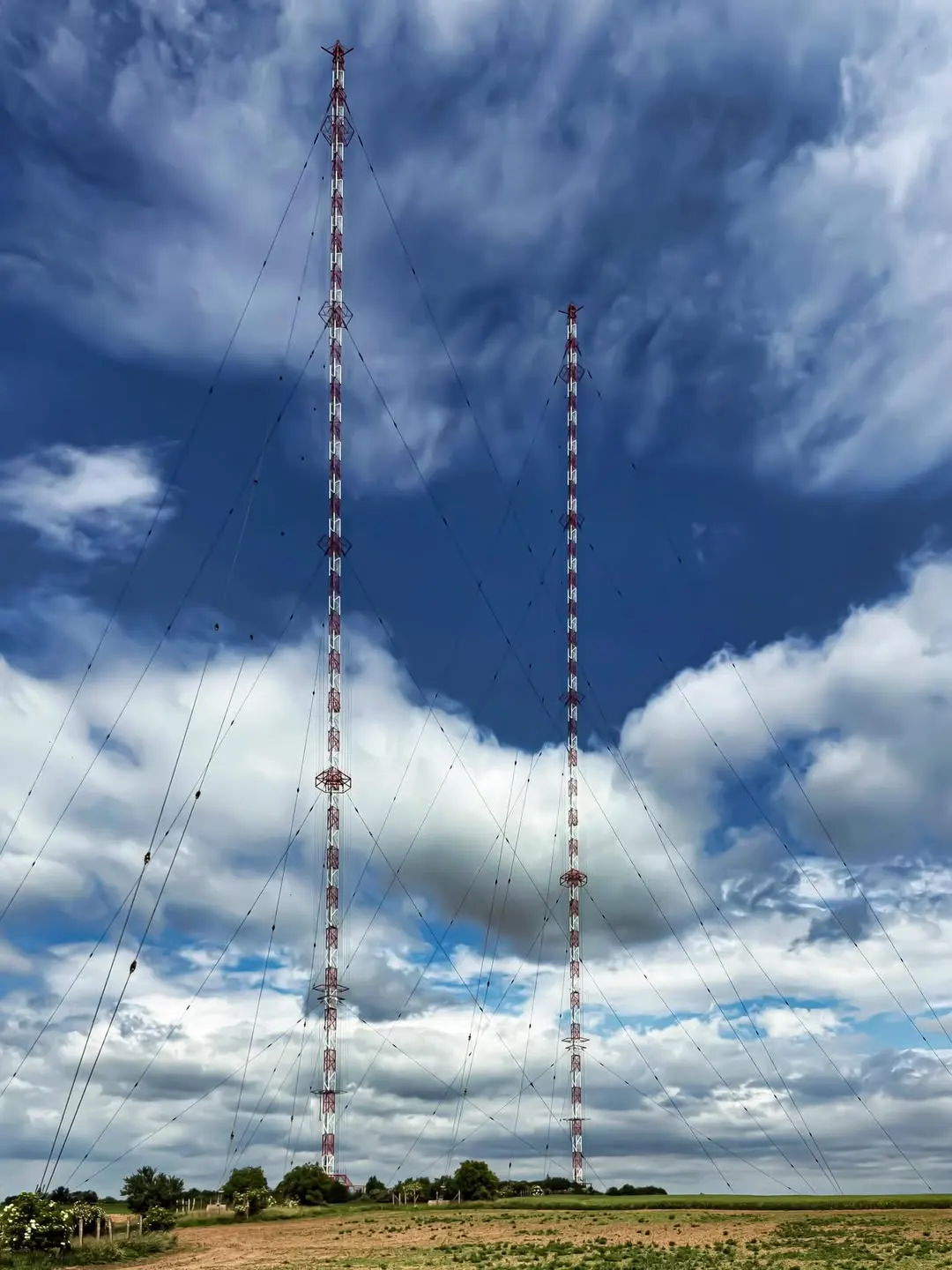
The tallest structure in the Czech Republic, the pair of masts of the Liblice transmitter near Český Brod, is preparing for its definitive removal. The company České Radiokomunikace (CRA), which manages the facility, announced that the complete demolition of the iconic towers will take place during October this year. The steel structures, reaching a height of 355 meters, have dominated the landscape in the Kolín region since the mid-1970s.
The key phase of the entire process, namely the actual demolition and fall of both towers, is scheduled for between October 12 and 16. The exact date and time will depend on current weather conditions, which are crucial for the safe controlled demolition of such tall objects. After the structures hit the ground, intensive clearing work will follow. Cutting and removal of steel scrap from the impact site should continue until the end of November.
Given the scale of the operation and the potential danger from the fall of hundreds of tons of steel, CRA has implemented strict safety measures. Owners and tenants of surrounding properties have already received an official warning, prohibiting them from entering and moving within the affected safety zones around the transmitter. The restrictions apply primarily to the period immediately around the demolition date, when there is a risk of injury or property damage due to tremors or ejected fragments.
The Liblice B transmitter was put into operation in 1976 and primarily served to broadcast medium-wave radio signals on the frequency of 639 kHz (Český rozhlas Dvojka). The pair of masts was unique for its "blaw-knox" construction, being self-supporting towers anchored only at the base, which made them an engineering marvel. However, with the gradual phasing out of medium-wave broadcasting (AM) in the Czech Republic, these energy-intensive and technically obsolete facilities lost their original purpose.
The demolition of the Liblice towers marks the end of an era of radiocommunication technology in the Czech Republic. After the debris is removed, the site will remain empty, and CRA has not yet announced specific plans for the future use of these lands. The reclaimed steel from the structures will likely be ecologically disposed of in metallurgical operations.