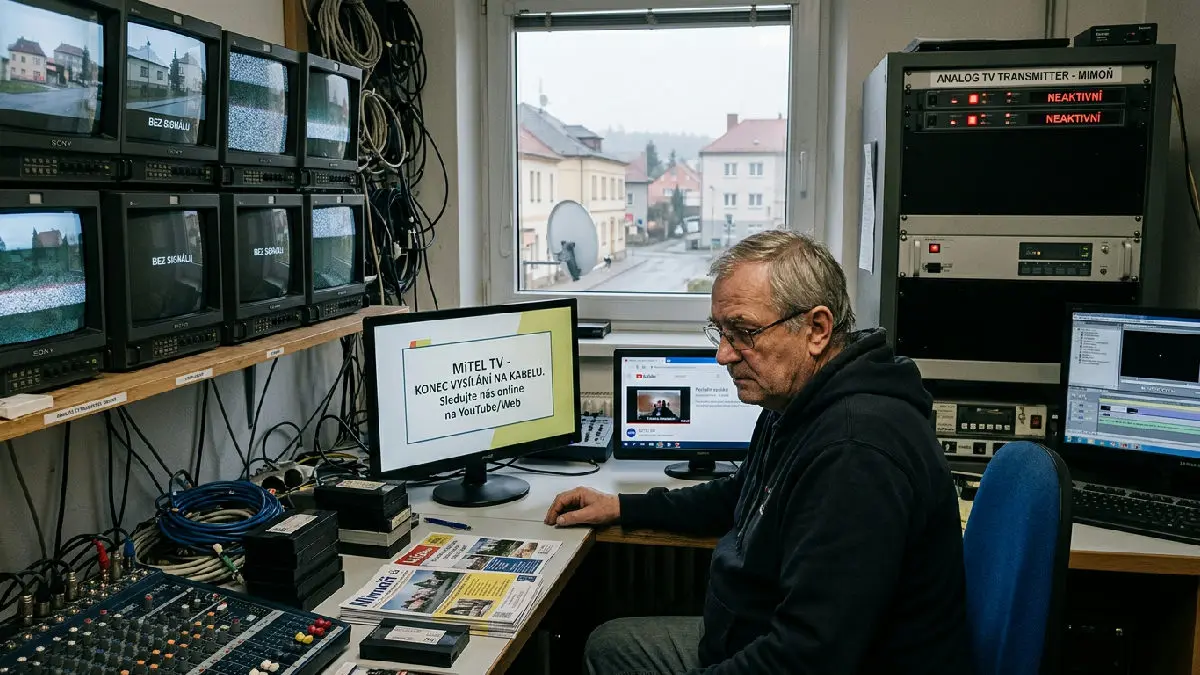
The municipal television MiTEL TV in Mimoň, in the Česká Lípa region, has definitively ceased its broadcasting in classic cable networks. After three decades of existence, this local information channel has moved exclusively to the online environment. From March 1st, viewers can only watch regional news, council meeting recordings, or reports on YouTube, social networks, and the city's website.
The end of distribution in the cable network is a direct consequence of ownership changes and the technological transformation of the infrastructure. The original networks in Mimoň were acquired by Nej.cz, which later became part of the telecommunications division of the PPF group. While CETIN took over network management and the operator O2 took over end customers, there was a transition from classic broadcasting to internet television platforms. It is precisely this process that is proving fatal for local television stations.
“This is not our decision. It is the decision of the cable network operators who bought Nej.TV. They have decided that they will no longer provide their services for our television,” explained the mayor of Mimoň, Petr Král.
A similar scenario threatens dozens of other cities across the Czech Republic. The critical situation is particularly evident in North Moravia, where many small local stations have already lost their positions in cable networks or are facing contract terminations. The cause is a legislative gap in the Broadcasting Act. While it obliges operators of classic cable systems to gratuitously reserve one channel for local programs (§ 54), this obligation does not apply to modern internet services (IPTV).
After legal consultations, the city of Mimoň concluded that it had no factual defense against the operator's actions. Operators argue that technologically, it is no longer cable television in the sense of the law, but an internet platform. The city council has therefore decided to transform MiTEL TV, which is managed by the contributory organization Kultura Mimoň, into a purely digital medium. The new concept should allow the city, for example, live broadcasts of cultural events, which the previous loop broadcasting did not offer.
Experts warn that without an amendment to the law that would reflect technological shifts, local television broadcasting in its traditional form could completely disappear. For older generations of viewers who are not used to consuming content via the internet, this means the loss of a primary source of local information.