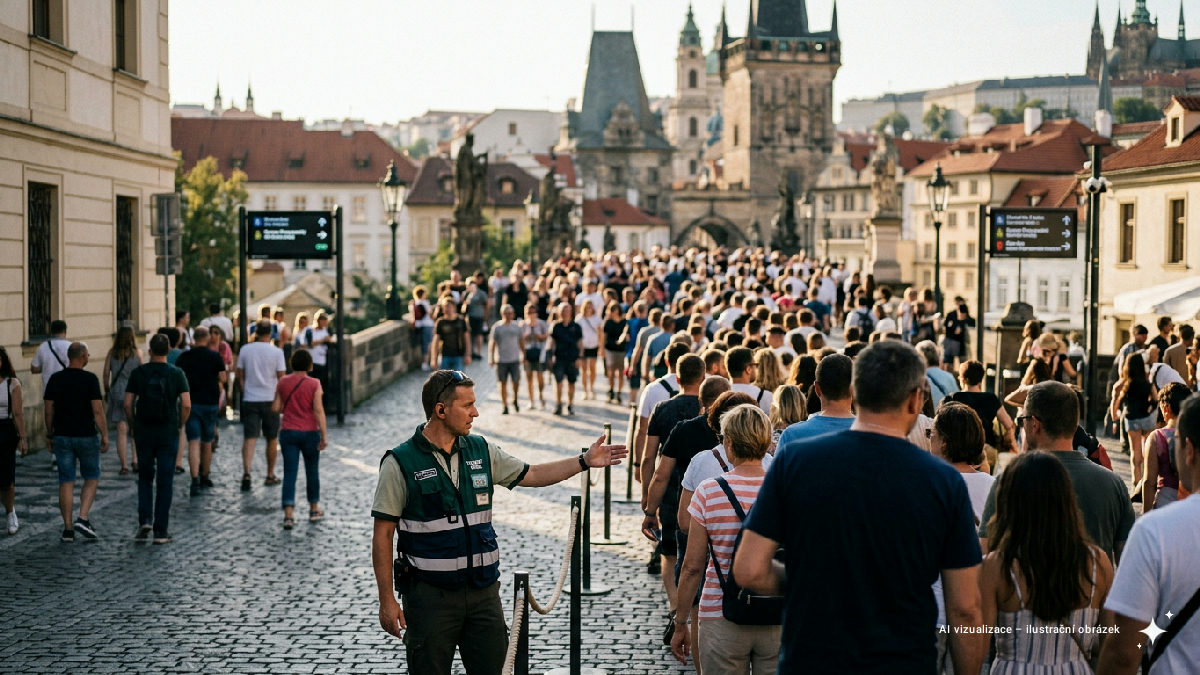
The historical center is overwhelmed by crowds in the morning, while other attractions just a few kilometers away lie empty. Parking lots in besieged locations are overflowing, public transport reaches its limits, and endless queues form at monuments. Yet, just a few hours later, the situation in the same destination can look entirely different. This scenario, typical for many successful tourist destinations, is behind the fundamental transformation of the entire industry.
For decades, destination management focused exclusively on attracting as many visitors as possible. Money flowed into advertising, brand building, participation in trade fairs, and promoting individual sights. However, according to a new OECD study, the role of tourist region managers is changing. Marketing alone will no longer suffice; the key to success is the ability to work with data and actively manage tourism based on it, rather than just attracting it.
The role of destination management is changing. Alongside marketing, the ability to work with data and manage tourism based on it will become increasingly important.
The End of Backward-Looking Statistics
The traditional approach to evaluating tourism relies on arrival statistics and the number of overnight stays. While this data is essential for long-term planning, it is practically useless for day-to-day operational management. The OECD therefore emphasizes the necessity of utilizing new data sources that allow monitoring tourist behavior in real time. Destinations no longer have to discover that a certain place was overcrowded weeks or months later but can react immediately.
To get a comprehensive picture of visitor movement, it is necessary to connect a wide range of information:
- Mobile data — tracking movement in space and time.
- Transport data — information on traffic congestion and parking lot occupancy.
- Reservation systems — data from hotels and online platforms.
- Attraction visitor numbers — current counts of people at specific attractions.
- Digital platforms — supplementary information on traveler preferences.
Thanks to these sources, it is possible to monitor not only total numbers of people but also length of stay or specific concentrations in local micro-locations. This level of detail allows managers to understand how tourist flows shift within the area and identify critical points before they collapse.
Managing Tourists Like Traffic
One of the most progressive directions is applying principles from transport to tourism. Modern transport systems commonly monitor traffic intensity, predict the formation of traffic jams, and offer alternative routes to drivers via navigation. The same model can be applied to tourists. If the system detects that a beach or historic square is nearing its capacity, digital services can recommend a different visiting time to visitors or direct them to a less crowded destination.
Tourist flows can be managed to some extent similarly to traffic, which anticipates congestion and recommends alternative routes.
The goal is not restriction but efficient work with destination capacity. If a visitor receives information about overcrowding in advance, along with an attractive alternative, the pressure is naturally dispersed. For local governments and administrators, this means the ability to boost cleaning efforts, adjust the operation of information centers, or temporarily increase staff numbers where data indicates it is needed.
Prediction Through Artificial Intelligence
While data alone describes the current or past state, the involvement of artificial intelligence (AI) and predictive models allows a glimpse into the future. These models incorporate a combination of many factors: the status of accommodation reservations, the calendar of sports and cultural events, as well as weather forecasts or historical behavior patterns for a given period. The destination can then estimate visitor influx with high accuracy several days in advance.
"The reason is simple. The problem for many successful destinations is no longer a lack of tourists, but their concentration in a few places and at certain hours of the day. A historical center can be overcrowded in the morning, while a few kilometers away, other attractions remain almost empty. Parking lots are full, public transport is insufficient, and long queues form at the most famous monuments. A few hours later, however, the situation can be completely different. This is precisely where data becomes crucial for tourism,"
This technological change also transforms the very content of destination management organizations' work. Their task is no longer just to attract new guests but to become coordinators between accommodation providers, transporters, monument operators, and local governments. According to experts, connecting data from these diverse entities, which often have fragmented information, is the most challenging part of the entire digital transformation of tourism.
The future of tourism management thus lies in a shift from blanket promotion to detailed logistics. The goal is to create a true picture of what is happening in the region and to ensure that the experiential comfort of visitors is maintained even during peak seasons. The speed of implementing these systems in specific regions and the willingness of individual partners to share their internal data for a common goal remain open questions.