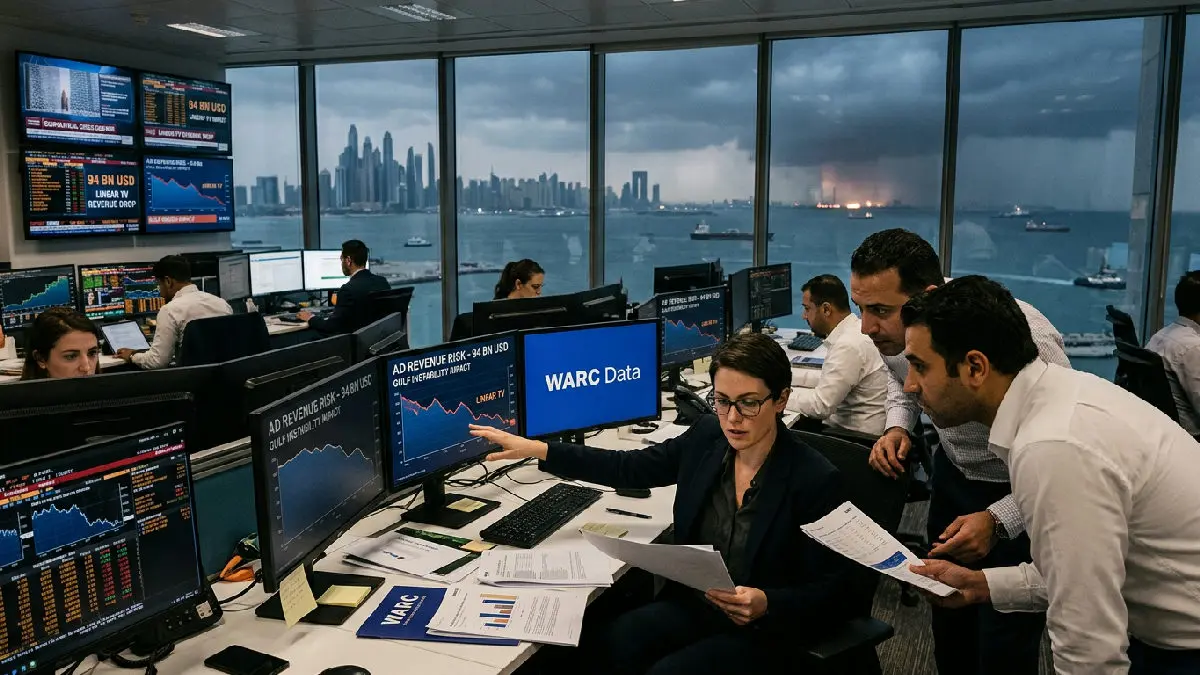
The global advertising market faces significant uncertainties in the coming 18 months, with billions of dollars in potential losses looming. Analysis by WARC suggests that the dynamics of media investments could dramatically change due to instability in the Persian Gulf region. The most threatened category remains linear television, which is already struggling with audience migration to digital platforms.
According to the latest forecast, geopolitical tensions could jeopardize up to $94 billion in additional advertising revenue worldwide. Experts warn that if the crisis in the region deepens, advertisers will be forced to re-evaluate their budgets and strategies for 2025. The slowdown will primarily affect traditional formats that require long-term planning and high upfront costs.
Accelerated Decline of Traditional Media
While digital channels show some resilience, traditional television broadcasting is at a critical juncture. WARC analysts emphasize that the current crisis acts as a catalyst for changes that would ordinarily take years. The decline in TV advertising revenue is expected to significantly accelerate due to the current situation in the Persian Gulf, forcing broadcasters into another wave of cost-cutting.
Key factors influencing decision-making for major brands include:
- Rising energy and logistics costs restricting marketing funds.
- Concerns about market volatility in key commercial hubs.
- Faster shift to measurable digital campaigns with immediate response.
Economic Impacts on Global Players
The Persian Gulf region plays an important role in the global advertising ecosystem, not only as a source of investment but also as a key territory for multinational corporations. Any disruption to its stability therefore has an immediate ripple effect on European and American media agencies. WARC states in its report that the next eighteen months will test the market's ability to adapt to crisis management.
“The looming decline in investment in linear TV becomes inevitable with the deepening crisis in the Gulf,” states the analysis, which predicts a shift of capital to safer and more flexible types of media.
The expected revenue shortfall of $94 billion represents a significant risk for the development of new television formats and the technological modernization of broadcasting. Advertisers are now focusing on efficiency and short-term returns, favoring social networks and search engines over traditional spot broadcasting.