
Yesterday, in the meeting, the obligatory “What’s trending on social media right now?” question popped up again. While half the newsroom scrolled through X and TikTok, the other half tried to guess whether a new legislative proposal was a headline topic or just more noise in the oversaturated ether. It’s precisely for these situations that tools like Trend Radar were created – so we can stop guessing and start making informed decisions.
What it's all about
Trend Radar is not just another keyword monitoring tool. Its main strength lies in identifying “nascent” topics – conversations that are just gaining momentum but have the potential to go mainstream. Imagine it as a seismograph that doesn’t record the earthquake itself, but the tiny tremors that precede it. It analyzes vast amounts of data from discussion forums, social media, blogs, and news aggregators, looking for anomalies: topics whose frequency and speed of dissemination deviate from the norm.
In practice, this means that instead of reacting to a topic that already has a two-day-old hashtag and is on the front pages of all servers, Trend Radar will alert you to a growing discussion in a specific Reddit group or among a small group of experts on X. It doesn’t solve the problem of “what’s being talked about now,” but “what will be talked about tomorrow or next week.” For PR teams, it’s a chance to prepare a response in time or jump on a wave; for newsrooms, it’s an opportunity to come up with an original topic before the competition.
The key is to distinguish signal from noise. The tool doesn’t just look for words, but contextual clusters. It can thus differentiate between a short-term meme about a celebrity and genuinely growing consumer interest in a new sustainable packaging technology. The output is not just a list of words, but graphs showing growth dynamics, key sources of dissemination, and related concepts that help understand the entire ecosystem of the topic.
Trends that support this
The deployment of trend recognition tools is not just a technological whim. It is a logical response to the changes the media and communication market is undergoing. Speed, relevance, and originality are no longer advantages, but conditions for survival.
Acceleration of the information cycle. Topics today live and die in a matter of hours, not days. Manual monitoring is inefficient and always behind. AI can process data in real-time and signal a change in dynamics before a human notices it.
Audience fragmentation into subcultures. Large, homogeneous audiences are breaking down. Key conversations are born in niche communities on Discord, in closed Facebook groups, or on specialized Substack newsletters. Trend Radar serves as a bridge to these often inaccessible worlds.
Pressure for efficiency and data-driven decisions. Management in companies and publishing houses increasingly demands that editorial and communication plans are not just the result of feelings, but are based on hard data. The ability to demonstrate that you are addressing a topic with demonstrable potential strengthens your position.
Content commoditization. Basic news is easily replicable today, even with the help of AI. A competitive advantage comes from originality, new perspectives, and the ability to discover topics that others don't yet have.
When to use it and when not
Like any specialized tool, Trend Radar has its ideal uses. It’s a great servant, but a bad master. The key is to know what job to call it for.
Searching for new, fresh topics for an editorial plan or content strategy.
Validating “gut feelings” – when you feel something is starting to be talked about, data will confirm or refute it.
Rapid response in crisis communication – the tool can detect a negative topic associated with your brand before it explodes.
Enriching evergreen topics with new, current perspectives that resonate with the audience.
As a substitute for investigative journalism – the tool finds a signal, but in-depth research and source verification remain up to humans.
For generating final texts – it is an inspirational and analytical tool, not a text generator. Its output is a basis, not a result.
As the sole source for planning – the intuition and experience of an editor or PR manager remain irreplaceable. Trend Radar is just one of many inputs.
Step by step
Define the monitored field. Don't start by monitoring “everything.” Define a specific area – for example, “sustainability in fashion,” “cybersecurity in small businesses,” or “innovations in payment methods.” The more precise the assignment, the more relevant the results.
Set sources and sensitivity. Select key platforms. For B2B technologies, it will be LinkedIn and specialized blogs; for lifestyle, more likely TikTok and Instagram. Set your sensitivity – do you want alerts for every minor fluctuation, or only for topics with high growth potential?
First run and noise calibration. The first results will likely be full of irrelevant topics and spam. Your task is to “teach” the tool what to ignore. Create lists of excluded words and sources (e.g., known disinformation accounts or marketing phrases).
Identify and analyze signals. Don't just track individual keywords. Look for “clusters” – groups of related topics that are growing together. See who the first disseminators are. Are they respected experts, anonymous accounts, or media? This determines the weight of the signal.
Qualitative verification. This is the most important step that AI cannot handle. Did you find a signal? Now, open the original sources, read the discussions, try to contact the actors. Understand the context, sentiment, and motivations behind the growing trend.
Integrate into the editorial plan. Based on verified information, decide how you will process the topic. Is it a quick report, an analytical article, a series of social media posts, or a basis for a press release? Assign the topic to the plan with a specific deadline and responsible person.
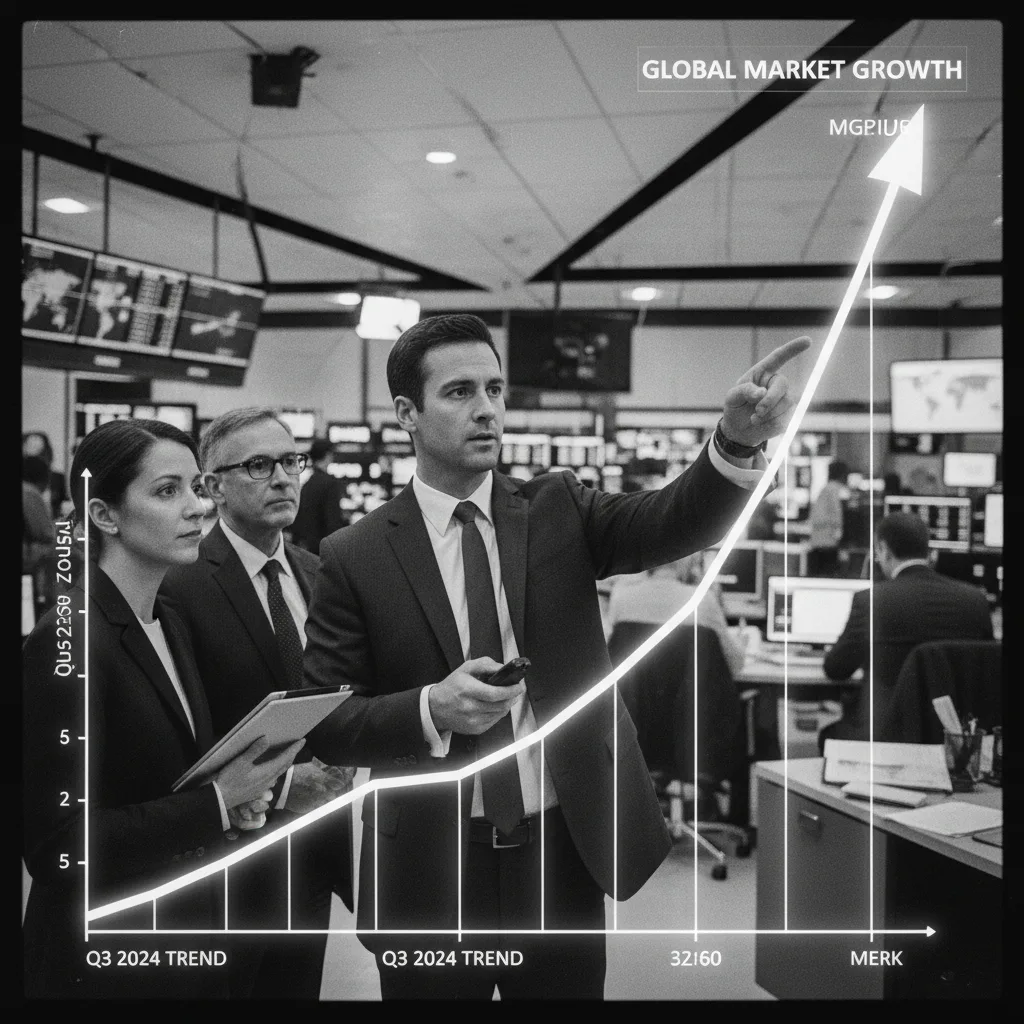
A trend that looks like noise today could be the main topic of the week tomorrow.
How to interpret the output
The biggest pitfall when working with Trend Radar is the fascination with large numbers and attractive graphs. A metric like “trend score” or “velocity” is worthless on its own if you don’t understand it in context. A high score can mean both the rapid emergence of a legitimate topic and a well-coordinated spam campaign. You need to ask: what is behind that number?
Instead of absolute values, observe dynamics. Is the growth smooth and organic, or sudden and artificial? Who are the main accelerators of the topic? Do you see a few accounts with enormous reach in the data (potential astroturfing), or thousands of small accounts (organic interest)? Also, monitor geographical and demographic distribution. A strong trend in the US may not be relevant to the Czech market at all.
The key is always to connect quantitative output with a qualitative perspective. Data tells you “what” and “how fast.” Your judgment, industry knowledge, and journalistic work must provide “why” and “what it means.” Without this human input, Trend Radar is just an expensive crystal ball showing confusing patterns.
Common mistakes
Fetishizing the “trend score” metric. Chasing topics just because they have a high number leads to superficial content and chasing sensationalism. Not every loud topic is important.
Ignoring source context. Adopting a trend from an anonymous forum without verifying who is spreading it and why is a professional failure. It could be manipulation or a complete fabrication.
Too broad a scope. Trying to monitor “the entire internet” leads to paralysis from information overload. Start narrowly and focused, then expand the scope.
Reacting to every fluctuation. Not every signal is the start of a major trend. Ninety percent of them fade away. Learn to patiently observe developments and don’t waste energy on false alarms.
Forgetting the target audience. A topic may be trending, but if it doesn't interest your readers or clients, it's useless to you.
AI is inspiration, not dogma
Tools like Trend Radar represent a significant shift. They automate work that was previously the domain of intuition and hours of source reading. However, it is crucial to understand their role – they are assistants and sparring partners, not editors-in-chief or strategists. Their task is to provide background information, highlight anomalies, and expand human horizons. The final decision, ethical judgment, and responsibility for published content must firmly remain in human hands.
Blind trust in data and algorithms leads to the creation of unified, unoriginal content that lacks human insight and empathy. A newsroom or brand that only algorithmically follows what is “trending” loses its voice, opinion, and ultimately its credibility. AI can help us find direction, but we must walk the path ourselves. It is a telescope that shows us new stars, but we must write the story about them.
What's next
Identifying a topic using Trend Radar is the first step. Once you have chosen what to write or communicate about, other tools come into play. In the next part of our “How-to” series, we will look at a tool for SEO content optimization, which will help process your discovered topic to be found not only by search engines but, most importantly, by your target audience.