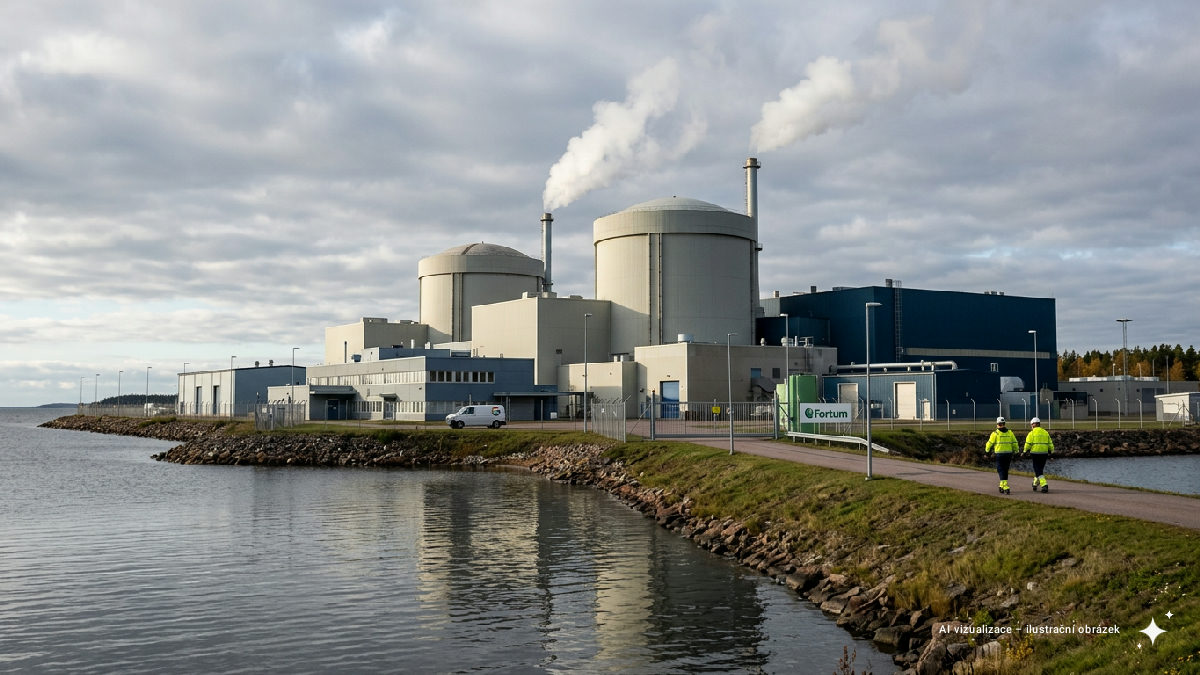
On the coast of the Gulf of Finland stands the Loviisa nuclear power plant, whose VVER-440 reactors have been supplying energy to the grid since 1977. This technological complex has become the focal point of a strategic alliance between energy giant Fortum and American technology company Google. The goal is to ensure a stable and emission-free energy source for the expanding digital world in a period when the electricity market is marked by high volatility.
Technology giant Google has officially confirmed its interest in Finnish nuclear energy by entering into a long-term Power Purchase Agreement (PPA). This contract, announced on September 14, 2026, will provide Google with stable energy supplies for a full 20 years. The contractual performance is planned for the period between 2028 and 2049, providing both parties an unprecedented level of predictability in an otherwise uncertain market environment.
Google will gain access to up to 50% of all electricity generated by the two-unit Loviisa nuclear power plant for two decades.
Nuclear power as a stabilizing element for investments
For the Loviisa nuclear power plant, with a total installed capacity of 1014 MW, this agreement represents a significant economic impetus. The plant currently covers approximately 10% of Finland's electricity production. Although the operator had previously obtained a government license to operate until 2050, the implementation of an extensive investment program to extend the reactors' lifespan requires strong financial guarantees.
These are precisely what the contract with Google brings. Thanks to it, Fortum can complete the modernization and ensure reliable operation of the power plant in the coming decades. The plans also include a potential increase in installed capacity by an additional 10 MW, which will help meet the growing demand for electricity driven by the development of the data economy and artificial intelligence.
Thanks to guaranteed off-take, Fortum can complete the modernization of the units and increase their total output by 10 megawatts.
Billions in investments in Finnish infrastructure
Google's commitment in Finland, however, does not end with energy consumption. The company plans to invest at least 13 billion EUR in the country over the next two years, which translates to approximately 315 billion CZK. These funds are primarily earmarked for the construction of new data centers and necessary supporting infrastructure. Finland is thus becoming a key destination for European technology investments.
Google's energy portfolio in Finland is based on a combination of sources:
- Nuclear energy — off-take of half of Loviisa power plant's production until 2049.
- Wind projects — support for wind farms with a total installed capacity of 629 MW.
- Energy storage — construction of a 94 MW battery storage facility.
- Environmental initiatives — allocation of funds for nature conservation and local communities.
Broader impact on the Finnish economy
According to Finnish officials, the country's decarbonized and reliable electricity system is a competitive advantage that attracts further capital. Investments in AI infrastructure are seen as beneficial not only for investors but also for the broader energy system and local communities. Deepening cooperation is expected to bring lasting benefits in innovation, research, and development.
“Finland has a unique opportunity to turn its decarbonized, reliable electrical system and robust industrial infrastructure into a foundation for the next wave of sustainable industrial growth. Long-term partnerships, such as that between Fortum and Google, are essential to achieve this goal, especially in today's uncertain market environment, characterized by low visibility and highly volatile electricity prices. Furthermore, our collaboration with Google provides a strong foundation for the continued development and reliable operation of our Loviisa power plant for decades to come,”
The future of the data economy
The use of nuclear energy for data center operations underscores the growing trend of technology companies seeking stable, emission-free baseload sources. While wind and solar sources are weather-dependent, Loviisa's nuclear units offer continuous supplies necessary for uninterrupted server operation. Google's investment program is expected to stimulate another wave of innovation within Finland's data economy, with the first phase of new projects anticipated to be evident within two years.