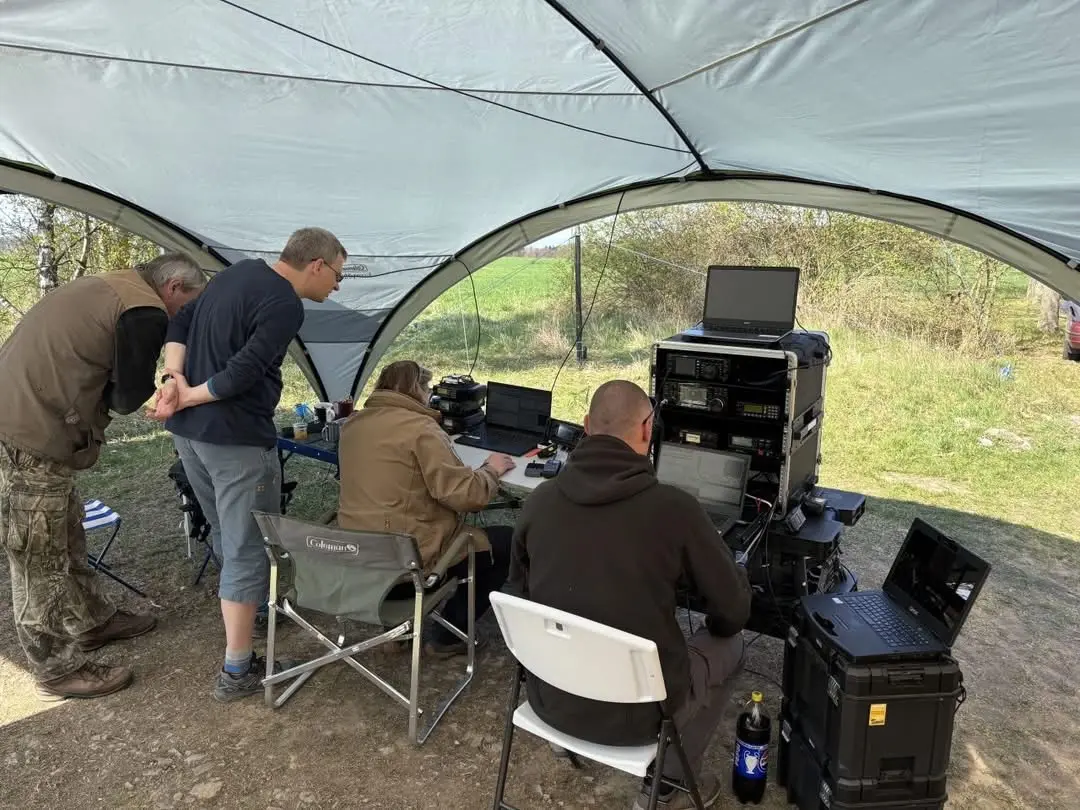
The Czech Telecommunication Office (ČTÚ) participated in the professional exercise ARDOS REGION 2026 (Amateur Radio Drone Operator System), which took place as part of the broader military exercise Federated Cloud. The office participated in the event within its competencies in the area of frequency spectrum monitoring. The aim of this activity is to verify the preparedness and readiness of alternative communication channels for cases where standard telecommunication infrastructure fails.
The main theme of the maneuvers was to ensure emergency communication during critical scenarios, such as a large-scale power outage (blackout), natural disasters, or other crisis situations that disable common public networks. Participants focused primarily on testing methods that are completely independent of commercial providers and internet connectivity.
During the exercise, experts tested the transmission of voice and digital data using amateur radio technologies. These specific communication procedures make it possible to maintain connection even in isolated areas or in the event of a complete collapse of mobile and stationary networks. Emphasis was also placed on coordination between state administration, armed forces, and the community of licensed amateur radio operators who have the necessary technical equipment and knowledge.
“Participation confirms the importance of preparedness for crisis scenarios and the support of alternative communication means that can play a key role in restoring connection.”
According to representatives of the office, cooperation between state institutions and the professional public from among volunteers is a fundamental element for building a resilient communication infrastructure of the state. Practical tests within ARDOS REGION 2026 are intended to refine technological procedures and define standards for eventual deployment in real conditions of crisis management.
The CTU's involvement in the Federated Cloud exercise reflects the growing need to address cyber and technological security at the national level. As part of the event, the office monitored frequency usage to prevent mutual interference between individual components and to ensure the purity of radio traffic even in extreme conditions of a simulated crisis state.