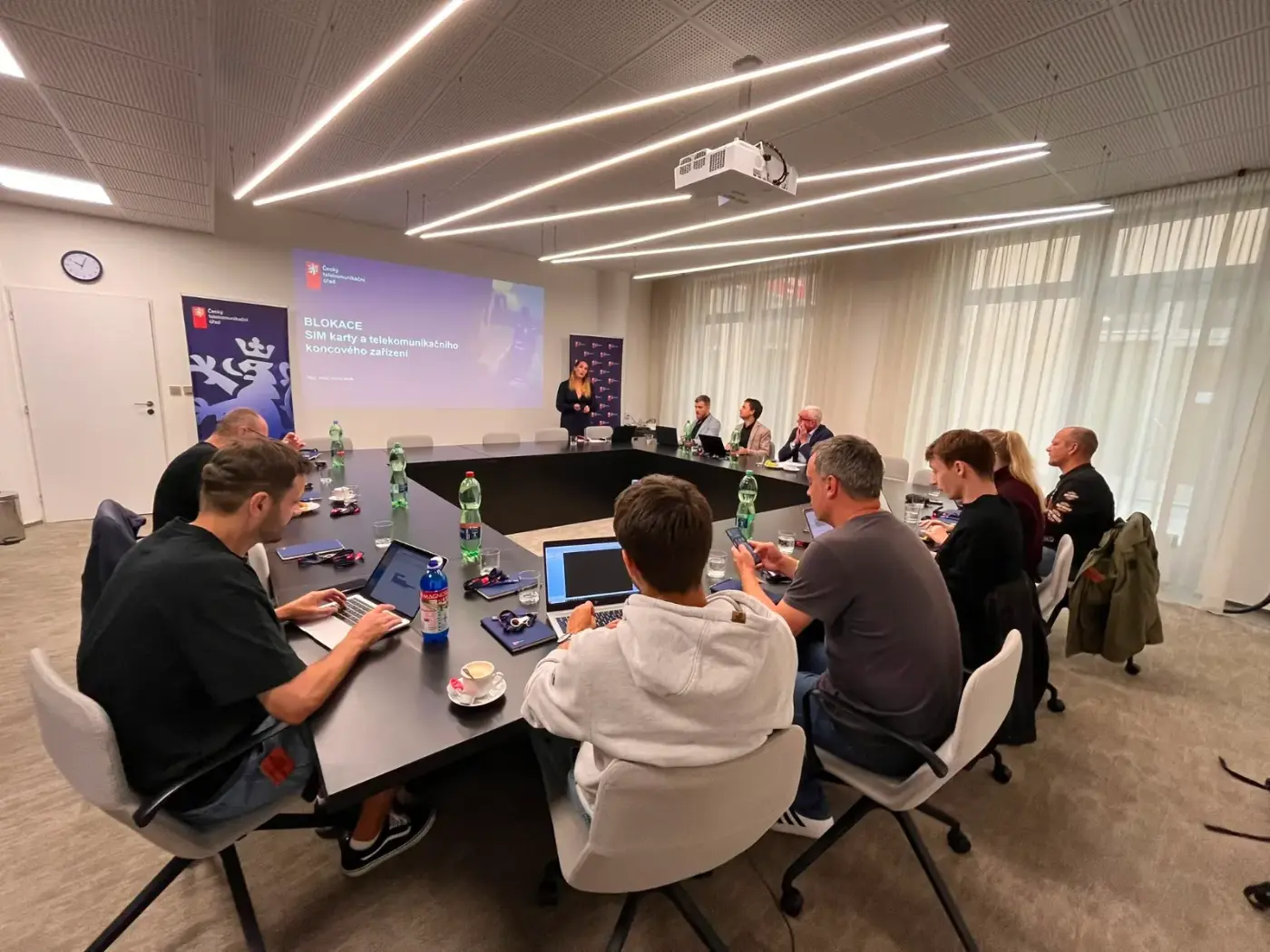
The Czech Telecommunication Office (CTIA) held a meeting with journalists before the start of the summer holidays, at which it presented strategic steps in the field of communication security and technological development. The main topics were efforts to prevent the misuse of emergency lines and the launch of the use of the 26 GHz frequency band for high-speed next-generation networks.
The issue of emergency calls is a priority for the regulator due to the protection of human lives. The office focuses primarily on preventing situations where these lines are intentionally blocked. Misuse of emergency calls is classified as an offense in the Czech Republic, for which the CTIA can impose a fine of up to 200,000 Czech crowns. The aim of the control activities is to ensure that the critical infrastructure remains fully accessible to people in real danger.
The second key point of the meeting was the future of wireless networks. The CTIA presented details for the practical use of the newly opened 26 GHz band (in the range of 24.25–27.5 GHz). This band, referred to as millimeter waves, is crucial for the full development of 5G and future 6G networks. Thanks to its extremely high transmission capacity and very low latency, it will be used primarily in industry and densely populated areas.
The new spectrum offers an opportunity for the creation of innovative services, such as the massive deployment of the internet of things (IoT), automation in industry (Industry 4.0), or remote control of robots in real time. The CTIA previously announced that access to this band will be based on a combination of individual authorizations and general authorizations, which aims to support a competitive environment and enable access to technology for smaller regional operators.
The August opening of the 26 GHz band follows previous frequency auctions and represents another step in fulfilling the digital transformation strategy of the Czech Republic. The office emphasized that modern wireless services are a necessary prerequisite for maintaining the technological competitiveness of domestic companies in the European market.