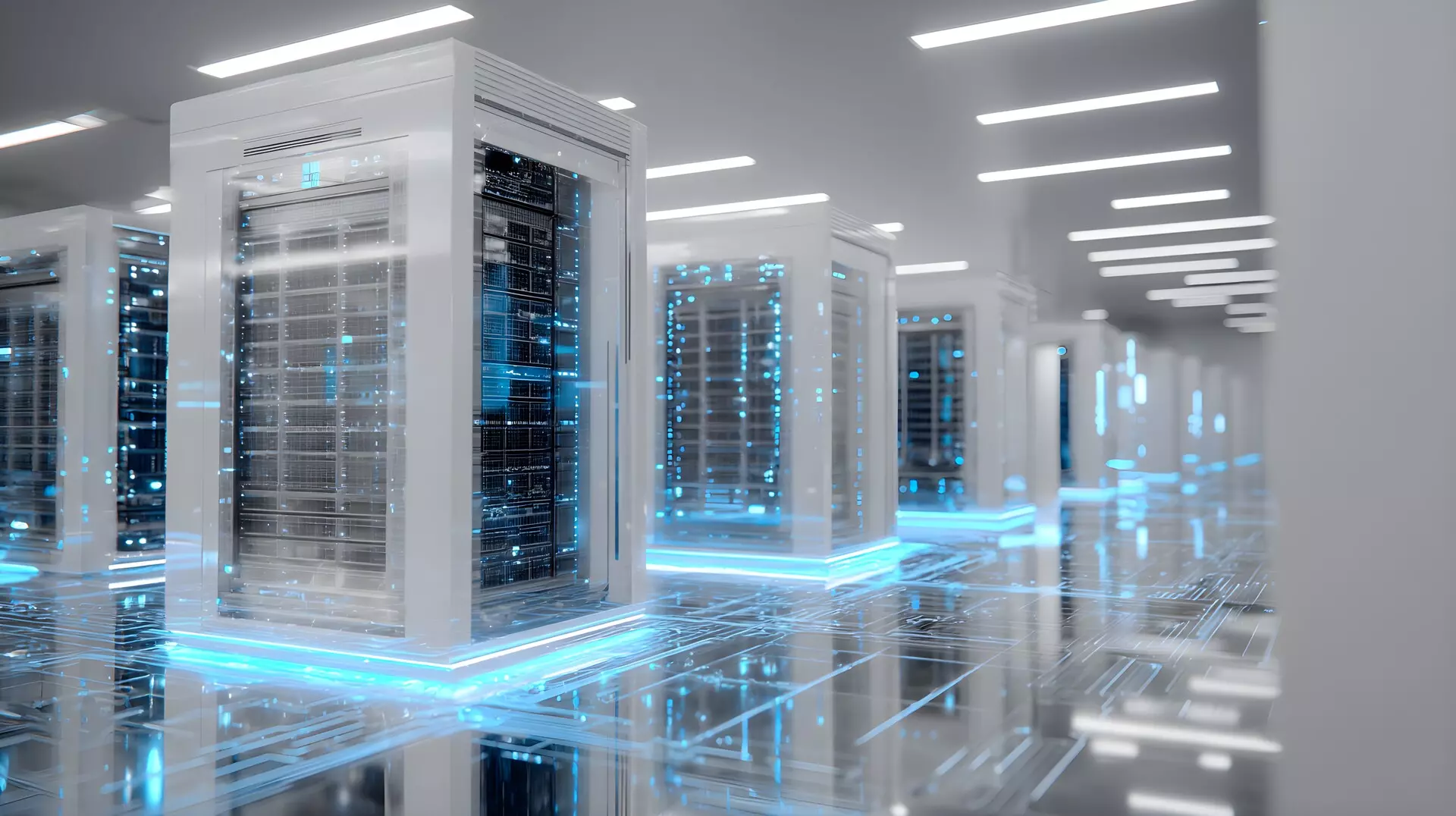
The advent of artificial intelligence (AI) and the use of high-performance graphics processing units (GPUs) are changing the landscape of Czech data infrastructure. České Radiokomunikace (CRA) has announced a comprehensive transformation of its services and technological background. This is in response to the dramatic increase in demands for computing power, energy consumption, and cooling efficiency that AI brings. The company is expanding its portfolio to include specific services such as providing power on GPU accelerators and expert consultations for companies working with big data and model training.
The current infrastructure, represented for example by the DC Lužice data center, is, after modernization, capable of handling IT loads with a power consumption of up to 20 kW per rack. While this is sufficient for standard operations and less demanding AI applications, technical limits are rapidly shifting. Modern GPU servers for AI training today require power consumption in the range of 30–80 kW per rack, which necessitates a transition to completely new architectural standards.
The main pillar of this strategy is the construction of a new data center, Prague Gateway DC. This facility is designed from the outset as a new-generation infrastructure ready for extreme loads. A key innovation will be the deployment of liquid cooling, which removes heat directly from components. Traditional air cooling loses efficiency at such high power densities. The liquid system will enable the operation of racks with much higher power consumption while reducing the building's overall energy intensity (PUE coefficient).
“The development of AI services in CRA's infrastructure includes not only performance provision but also consulting support. AI workloads have specific requirements, especially extreme density of computing power within a single rack, leading to an increase in energy consumption,” the company states in its report.
In addition to cooling, CRA plans innovations in energy as well. Prague Gateway DC anticipates a modern architecture using 800 V, which will reduce energy transmission losses and ensure more efficient power distribution to servers. In the area of backup, the deployment of graphene batteries is being considered, which should offer faster response, longer lifespan, and more compact dimensions compared to traditional UPS systems.
CRA intends to use a hybrid model that combines existing locations with new, cutting-edge facilities. This strategy aims to enable flexible customer migration between different types of infrastructure according to their current needs, from standard IT systems to the most demanding AI projects and high-performance computing (HPC).