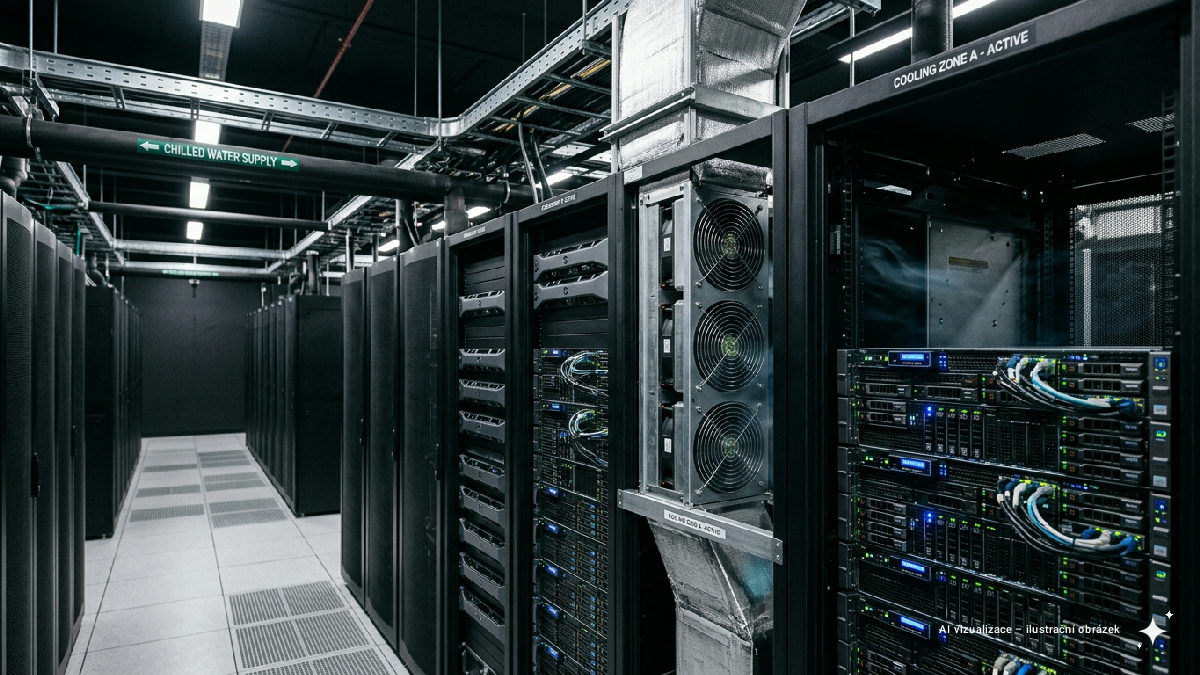
An average office with 100 employees pays approximately 1,050,000 CZK (£34,854) per year for energy. Of this massive amount, a staggering 304,000 CZK (£10,100) is spent exclusively on running air conditioning units. This fact highlights how cooling indoor spaces has turned into an energy-guzzling giant, accounting for nearly 29% of total electricity costs in the commercial sector. With rising summer temperatures, cooling efficiency is becoming critical to the stability of global power grids.
Recent analyses reveal that cooling is on track to surpass even artificial intelligence technologies in total electricity consumed. By 2035, building cooling will be responsible for 13% of global electricity demand. Companies are therefore urgently seeking ways to reverse this trend, with attention shifting back to the oldest and simplest mechanism: natural building ventilation.
Building cooling will consume a full 13 percent of global electricity by 2035, outstripping even artificial intelligence in grid demand.
Why Air Conditioning Trumps Efficiency
The primary issue in commercial buildings lies in user habits and architectural design conventions. Office workers frequently turn on AC units first thing in the morning and leave them running continuously throughout the workday without any regulation, even when outdoor temperatures do not warrant it. While residential homes—especially in the UK—historically lacked air conditioning, modern commercial properties rely on it as their sole source of thermal comfort.
Natural ventilation, by contrast, relies on dramatically improving airflow through a building to prevent a stuffy and humid indoor environment. The goal is to allow air to circulate freely and create a gentle cross-breeze, naturally lowering indoor temperatures without mechanical cooling. According to expert recommendations, even relatively brief periods of airing out spaces every hour can deliver noticeable improvements.
The UK Health and Safety Executive (HSE) identifies three basic steps to improve workplace ventilation:
- Opening windows — keeping a window open for just 10 minutes every hour can significantly increase fresh air supply.
- Using air vents — installing trickle vents allows air circulation without needing windows opened wide.
- Opening doors — helps establish natural drafts throughout an entire office floor.
Air conditioning accounts for 29 percent of total electricity costs in an average office of 100 people.
Barriers and Practical Solutions for Businesses
While natural ventilation may seem like a straightforward solution, businesses often face practical hurdles that keep them tethered to power-hungry air conditioning. Key issues include street noise, security risks from open windows on lower floors, nuisance insects, or drafts scattering paperwork across desks. However, strategies exist to eliminate these problems at a fraction of the cost of running AC units.
One of the most effective approaches is intensive ventilation outside working hours. Leaving windows ajar or using trickle vents overnight allows office temperatures to drop by several degrees before the first employees arrive. In practice, this means the air conditioning does not need to be switched on at 8:00 AM, but rather during peak afternoon heat, saving up to 4 hours of daily operating time.
“IEA: “I don’t see any credible pathway for the energy world to return to the way it was before””
Independent daily energy news
Investing in Accessories to Drive Savings
Compared to the tens of thousands of pounds businesses spend annually on electricity, the cost of accessories for natural ventilation is marginal. Installing insect screens resolves hygiene concerns while offering an added degree of privacy. If traffic noise is the main obstacle, providing noise-cancelling headphones to employees remains substantially cheaper than the constant hum of powerful AC compressors.
Security concerns can be managed by fitting certified window restrictors that allow windows to open only to a safe point, preventing unauthorized entry. Natural ventilation may not completely replace air conditioning during extreme heatwaves, but it serves as an indispensable tool for cutting energy dependence. Whether companies can adapt their habits before the power grid reaches its breaking point in 2035 remains an open question of corporate strategy and willingness to embrace simple innovations.