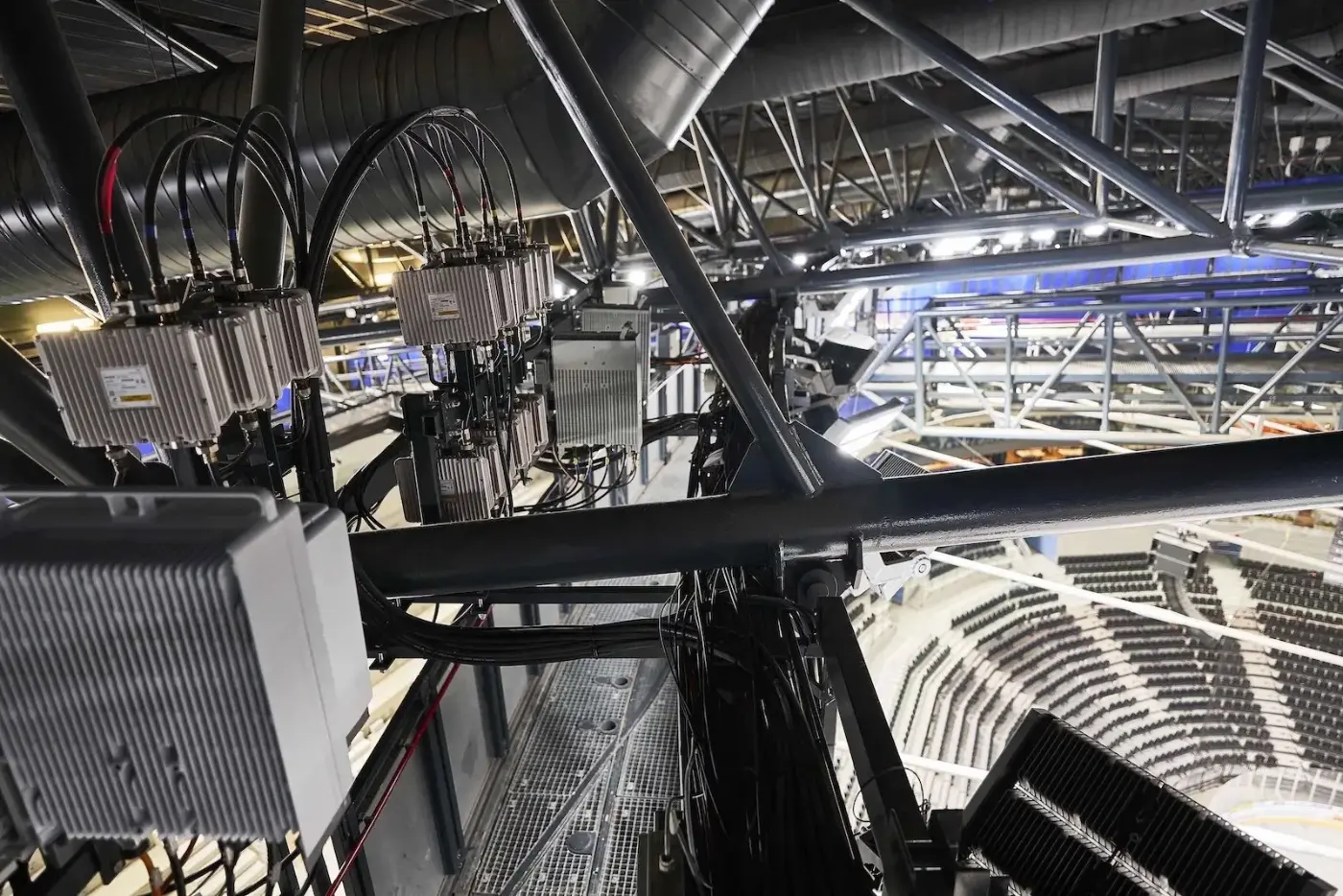
Telecommunications infrastructure in prominent and busy venues, such as Prague's O2 arena or exhibition grounds, is undergoing a process of technological optimization. Through its expert teams, CETIN is implementing tools that allow for dynamic management of mobile network capacity according to the current occupancy of the facility. This makes it possible to reduce network operation to a minimum outside of event times.
According to Martin Táborský, who leads the radio network quality and optimization team at CETIN, the main motive behind these steps is energy efficiency.
“Thanks to smart tools, we can effectively manage available capacity in the O2 arena or at exhibition centers. When no event is taking place, we use only a part of the network, thus saving energy,”
explains Táborský, adding that the team currently manages infrastructure primarily for fourth and fifth-generation mobile technologies.
In addition to optimizing existing facilities, technological development focuses on private 5G networks. These dedicated networks are built for specific customers with extreme demands on security and data protection. Another significant milestone is the deployment of the 5G SA (standalone) standard. This technology brings so-called network slicing, which is the ability to allocate guaranteed capacity for specific purposes, such as television broadcasts from stadiums, without being affected by network overload from regular users.
CETIN's optimization processes are based on a combination of performance data, field measurements, and crowdsourcing data from Ookla. The company also operates part of its infrastructure in a shared mode with operator T-Mobile, which requires close coordination in managing regional and national network parameters. In the future, the company expects wider involvement of artificial intelligence, which should take over routine administrative tasks and data analysis.