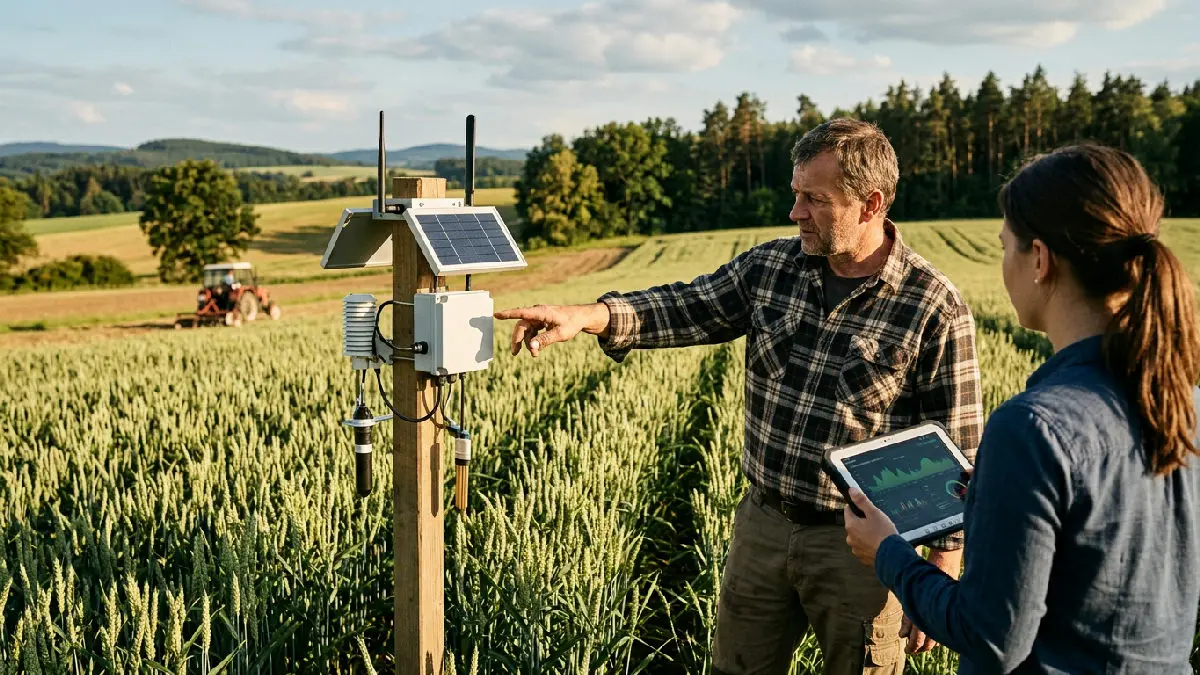
Czech agriculture and forestry are undergoing a fundamental transformation, where traditional farming experience is increasingly integrated with modern technologies. In response to climatic fluctuations and a shortage of labor, the concept of precision farming is coming to the forefront. In this context, České Radiokomunikace (CRA) presented specific projects utilizing the Internet of Things (IoT), which enable a shift from reactive care to a predictive landscape management system.
A key element for the functioning of these technologies in the field is the LoRaWAN network. It is designed to provide connectivity even in remote areas without regular signal, while end sensors, due to their low energy consumption, can operate on a single battery for several years. This infrastructure forms the basis for collecting data from extensive agricultural areas and deep forest stands.
Smart Pastures and Intruder Detection
In livestock production, digitalization is manifested primarily in the form of intelligent pastures. Special IoT collars constantly monitor the biorhythms of farm animals. The system can automatically evaluate behavioral anomalies and timely warn breeders about impending illnesses or difficult births. This significantly reduces losses in livestock and improves animal welfare.
Another innovation is the use of smart cameras with integrated artificial intelligence. Thanks to Google Coral TPU technology, image analysis takes place directly on the edge device (Edge AI). In practice, this means that the system detects uninvited visitors in real-time without requiring constant wired connectivity or transferring large amounts of data to the cloud.
Forest Restoration After Bark Beetle Calamity
In forestry, technologies primarily focus on efficient stand restoration. Experts use a combination of ground and remote measurement methods:
- Installation of soil sensors up to 40 cm deep to monitor moisture.
- Remote sensing using the NDVI (Normalized Difference Vegetation Index).
- Analysis of vegetation health to optimize planting.
“Landscape digitalization is not a utopia but a path to a more sustainable and efficient future that fulfills modern ESG goals,” CRA representatives state regarding the development of environmental technologies.
Monitoring data in real-time allows foresters and farmers to make decisions based on exact data instead of subjective estimates. This approach increases the chance of successful adaptation of the Czech landscape to changing climatic conditions while maintaining economic operational profitability.