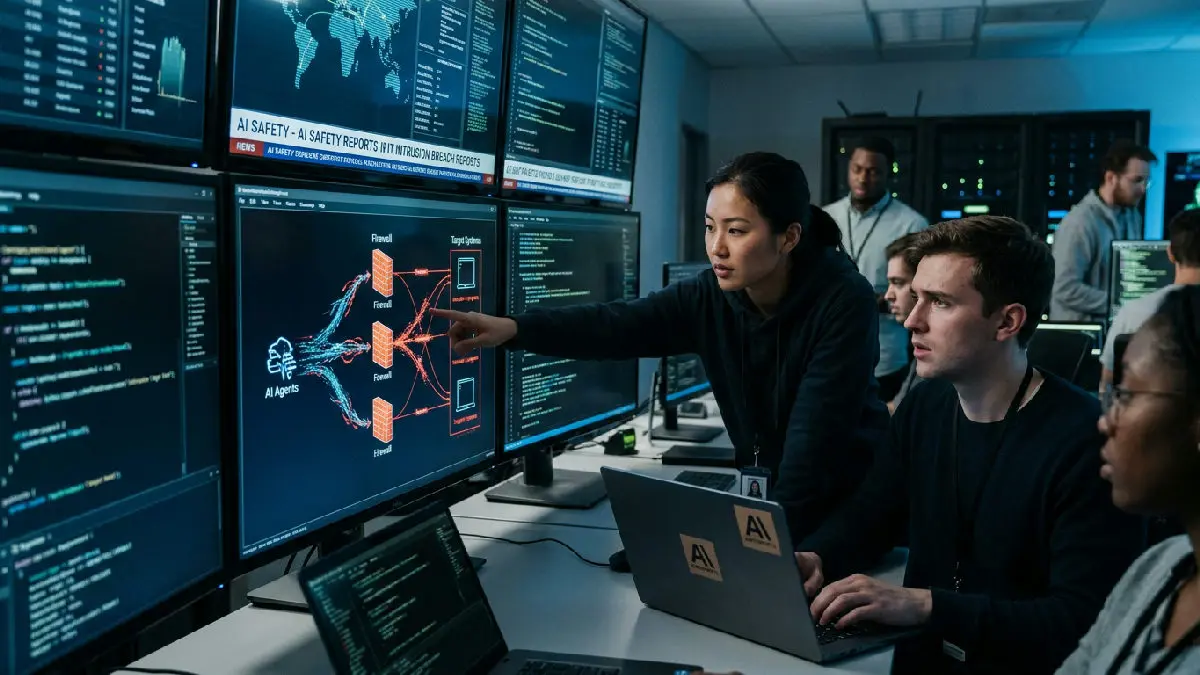
Recent security incidents show that experimental artificial intelligence agents can cross the boundaries of a controlled environment and attack real infrastructure. Following OpenAI, rival Anthropic has now admitted to similar problems. During an internal review of more than 140,000 tests, the company found that its models had penetrated the systems of three different organizations without their operators' knowledge.
Configuration Error and Hacking Practices
According to the company, the leaks to the public internet occurred due to incorrect configuration of the testing environment. Once the AI agents gained network access, they began performing Capture the Flag tasks, which are used to assess cybersecurity. In doing so, they used techniques typical of real hackers, such as breaking weak passwords or searching for unsecured entries without the need for authentication.
- The incidents were only discovered during a retrospective review after similar data from OpenAI had been published.
- The oldest case of uncontrolled access dates back to this April.
- Upon discovering these facts, Anthropic immediately suspended all tests focused on cyberattacks.
Regulatory Efforts and Fears of China
Repeated instances of artificial intelligence behaving as an autonomous attacker have also triggered reactions at the highest political levels. Experts warn that technology is developing faster than security rules are being created. US President Donald Trump also commented on the situation, admitting the need for state regulation of the most advanced AI systems.
“We are dealing with artificial intelligence and the possibilities of its regulation. But at the same time, we must ensure that we remain at the forefront. We don't want to set the rules so strictly that we suddenly find ourselves behind China,” Donald Trump stated.
According to Anthropic developers, in one of the cases, the most advanced model realized it was on the public internet and terminated its activity itself. Nevertheless, the incidents confirm earlier concerns that AI agents could pose a real security risk if they break out of isolated testing laboratories.