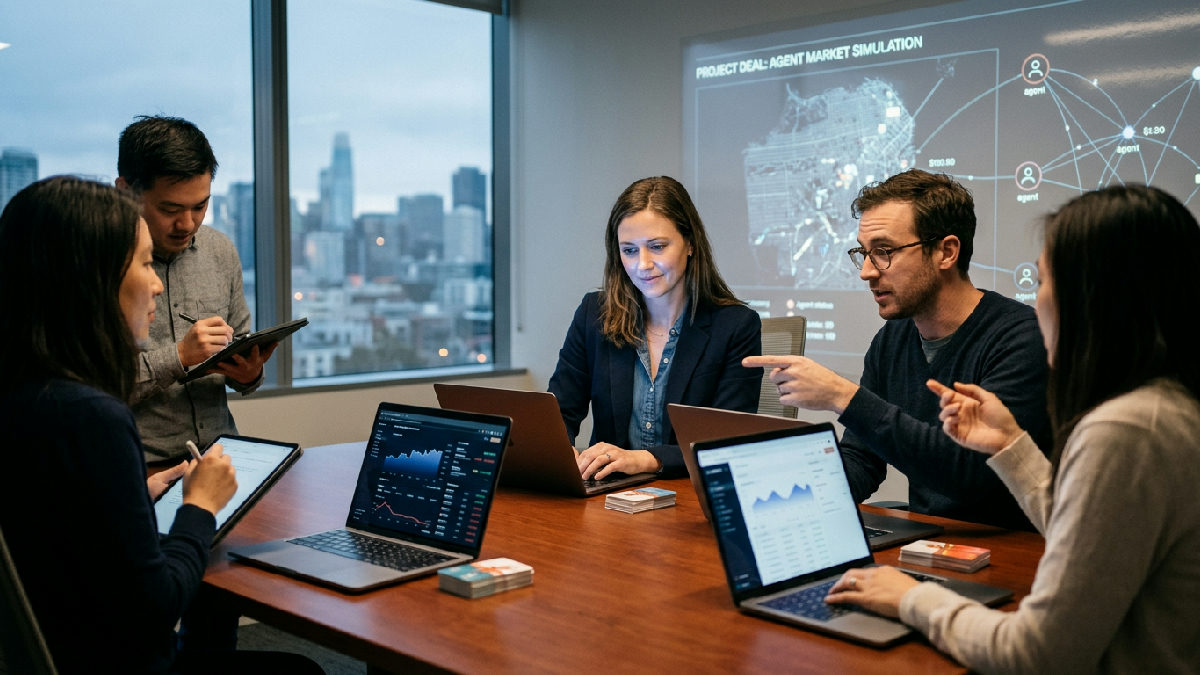
Anthropic carried out a unique pilot experiment called Project Deal, creating a closed marketplace designed for autonomous trading between AI agents. In this simulated environment, artificial intelligence represented both buyers and sellers, with real transactions involving real goods and real money.
The test involved 69 Anthropic employees, who formed a selected group of participants. Each of them received a budget of $100 in gift cards, which they could use through their AI agent to buy items from colleagues. The results showed a high level of efficiency in automated negotiation: a total of 186 deals worth more than $4,000 were completed. Company representatives said they were surprised by how smoothly the process worked.
The research team operated four different marketplaces in parallel. One was based on the company’s most advanced model, and the transactions made there were actually completed after the experiment ended. The other three served as a comparative study. The data showed significant differences in the performance of the individual systems. Users represented by more advanced models achieved objectively better trading outcomes than those whose agents relied on weaker technological foundations.
Users did not notice the gap between the models’ capabilities, raising questions about a possible agent-quality divide in which people on the losing side may not even realize they are at a disadvantage.
This phenomenon points to a potential risk in the future commercial use of AI agents. If one side relies on a more technologically advanced tool than the other, it creates an asymmetry of information and bargaining power that a human user may not recognize in real time. Another interesting finding from the experiment was that the initial instructions given to agents, such as negotiation strategy, had only a minimal impact on whether a sale was completed or on the final agreed price.
With this test, Anthropic laid the groundwork for studying the so-called agent-on-agent economy. Project Deal shows that autonomous systems can manage budgets and carry out commercial operations on behalf of people, but the technology also brings new challenges around transparency and the fair design of market environments.